
Google Ads Is Removing Language Targeting From Search in September 2026 & What It Means for Your EN/AR Campaigns

Updated 20 September 2026. The rollout is due in the last days of this month, so this post now leads with what to do before and after it. I have also corrected three things in the first version: it said Shopping ads were unaffected (Google's page does not mention Shopping), it described the nine-month gap incorrectly (that is the delay past Google's original end-2025 deadline), and it attributed a phrase, "enhanced AI prioritisation", to Google that I cannot find in Google's wording.
When I wrote my guide on structuring EN/AR campaigns in Google Ads, campaign-level language targeting was one of the levers I told you to use deliberately. That lever is going away. Starting in September 2026, Google is removing the language targeting setting from Search campaigns, and Performance Max stops using it for the Search Network. If you run bilingual campaigns for a Dubai or wider UAE audience, this is worth an hour of your time before it lands.
Google Ads Language Targeting Is Ending: What It Means for EN/AR Campaigns
What Google Has Announced
Google's Help page on language targeting says that starting in September 2026 the way language targeting works is changing for Search campaigns and for the Search Network portion of Performance Max campaigns. Search Engine Journal, reporting on 13 August 2026, describes the rollout as coming in late September. This is what changes:
| Campaign type | What changes |
|---|---|
| Search (including AI Max for Search) | The campaign-level language targeting setting is removed. Ads match automatically based on the language of your ads |
| Performance Max, Google Search Network placements | The campaign-level language setting no longer applies; language matching works the same way as in Search |
| Performance Max, other channels (YouTube, Display, Discover, Gmail) | The language setting continues to apply |
| Shopping, Demand Gen, Video, Display | Not addressed on Google's page. Do not assume either way; check your own account |
Google says no action is required from advertisers. Search Engine Journal adds that existing language criteria can stay on your campaigns but will no longer influence Search targeting, that separate-language campaigns can keep running as they do now, and that Google recommends developers stop sending language criteria when they create or update Search campaigns through the API.
The change is later than first planned. Google's documentation from August 2025 said the end of 2025, and PPC Land put the delay at roughly nine months. Google's stated reasons, as PPC Land quotes them, are that the campaign-level setting had become redundant because automatic detection already works, and that the manual setting caused confusion that led to set-up errors. The 2025 version of the plan covered Search only; this one names Performance Max as well.
How Language Will Be Decided Instead
Instead of you choosing a language, Google will decide which ad to show largely from the language of the ad itself, together with what it already knows about the languages the user understands. Search Engine Journal lists the language of the creative and the landing page as the signals, and Google's page also says it prioritises ads that match the language of the search term.
That has two consequences. The old version of this post only covered the first.
Your ad copy now does the targeting. An ad written in Arabic is treated as an Arabic ad. Mixed-language responsive search ads, for example English headlines with an Arabic description line, send a muddier signal than pure ones.
Your landing page is part of the signal. An Arabic ad that sends people to an English page, or the reverse, gives Google two different languages to weigh. If your Arabic campaigns point to English pages because no Arabic page exists, that gap becomes a targeting problem as well as a user experience problem.
Why It Matters for a Bilingual UAE Account
For a single-language advertiser, Google is probably right that little changes. For a UAE account it is less clear. Search behaviour here mixes scripts and languages: Arabic queries typed in Arabic script, Arabic written in Latin letters, English queries from Arabic speakers, and queries that mix both. My guide on separate campaigns versus ad groups for EN/AR explains why I kept the two languages apart. The campaign-level setting was a guaranteed control point. What replaces it is inference.
PPC Land put the open question well: whether ad-language matching behaves as intended in bilingual markets is something that can only be answered after September. Nobody has published before-and-after data for the UAE, and I do not have any either. So treat what follows as a way to notice a shift early, not as a prediction that one will happen.
What to Do Before the Change
1. Make ads and landing pages match the intended language. Search Engine Journal's advice for multilingual campaigns is to make sure ads and landing pages use the intended languages, particularly where AI-generated assets are involved. Check every Arabic ad points to an Arabic page and every English ad points to an English page.
2. Make each ad group single-language. Keep English and Arabic headlines and descriptions in separate ad groups, and keep your Arabic keywords and English keywords apart too. This gives the matching a cleaner signal than a mixed responsive search ad.
3. Keep separate language campaigns if you already have them. Google says they will continue to function. Separate campaigns still let you set different budgets, messages and reporting per language, so the removal of one setting is not a reason to merge them.
4. Review any text customization. If you are on AI Max and Google writes headlines and descriptions, read the generated copy in both languages. I cover the wider AI Max upgrade in the AI Max post.
5. Take a before-state. Export the last 30 days of search terms, impressions, clicks and conversions by campaign. Then classify the search terms by script so you can see how much of your traffic is Arabic and how much is English. In Google Sheets, with the search term in column A, this formula flags Arabic-script terms: =REGEXMATCH(A2,"[\x{0600}-\x{06FF}]"). Try it on a few rows first, because it will not catch Arabic written in Latin letters.
What to Do After the Change
For the first two weeks after the rollout, compare the same figures against your before-state, by campaign, every few days. Look at the share of Arabic-script search terms in your English campaigns and the reverse, at conversion rate by language, and at your search terms report for terms that look misplaced. Search Engine Journal also suggests monitoring search terms and geographic traffic patterns after the rollout. If an English campaign starts collecting Arabic queries that convert badly, or the reverse, the fixes are the ones above: cleaner single-language ad groups, matching landing pages and language-specific negative keywords. My guide to reading the search terms report covers the negative keyword side.
Performance Max needs the same discipline, with one extra step. Because language still applies to YouTube, Display, Discover and Gmail but no longer to Search, a bilingual campaign could see its Search mix change while the other channels stay put. Segment your reporting by channel so you can tell. My post on Performance Max in 2026 covers the new reporting and asset testing you can use for this.
What I Would Not Do
Do not rebuild a working account speculatively. Google says no action is required and that separate-language campaigns continue to work. Restructuring before you have evidence costs you learning history for a problem you may not have.
Do not delete your language settings in a panic. Existing criteria can stay; they simply stop influencing Search. Removing them helps nothing.
Do not judge it on the first two days. Volumes move for many reasons around a platform change. Give it two weeks and compare like with like.
What to Do This Week
Audit. Open each Arabic and English campaign and check the ads and landing pages are in the same language.
Clean. Split any mixed-language ad groups.
Baseline. Export 30 days of search terms and conversions and classify them by script.
Schedule. Put two review dates in your calendar for the first two weeks of October.
Frequently Asked Questions
Next Step
If you run English and Arabic campaigns and want them checked against this change before it lands, my Google Ads management service includes a language and structure audit. Send me your account layout and I will tell you what I would fix first.
Related reading:

Written by Amir Sibaee
Google Ads & Media Buying Specialist · SEO/SEM · Marketing Automation ·...
More about Amir →Related Reading
-
 Should You Let an AI Agent Run Your Ad Campaigns? A Dubai Marketer's Honest Take
-
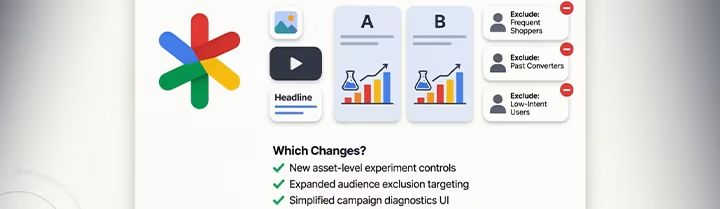 Performance Max in 2026: Asset Experiments, New Audience Exclusions, and What Actually Changed
-
 10 AI Prompts for Google Ads That Work in Dubai: UAE Industry Copy Guide 2026
-
 Performance Max Competitor Playbook: Reach Your Rival’s Shoppers (Without Breaking the Rules)
Want this done for your business? See my Search Engine Marketing services in Dubai.
Latest Posts
-
 OpenAI Ads Are Now Open in the UAE: What ChatGPT Advertising Costs, Who Qualifies and How to Start
-
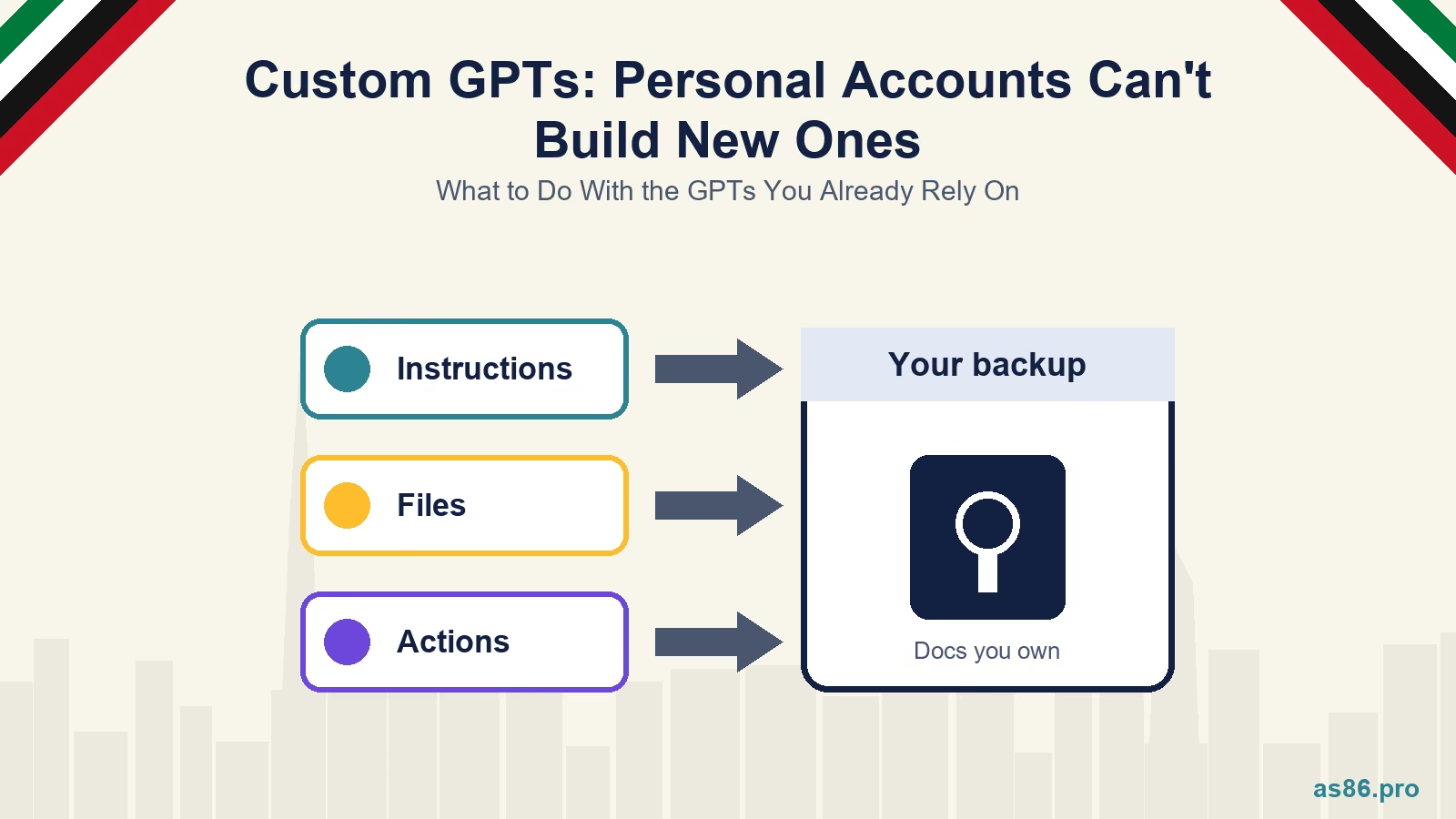 ChatGPT Custom GPTs: Personal Accounts Can't Build New Ones. What to Do With the GPTs You Already Rely On
-
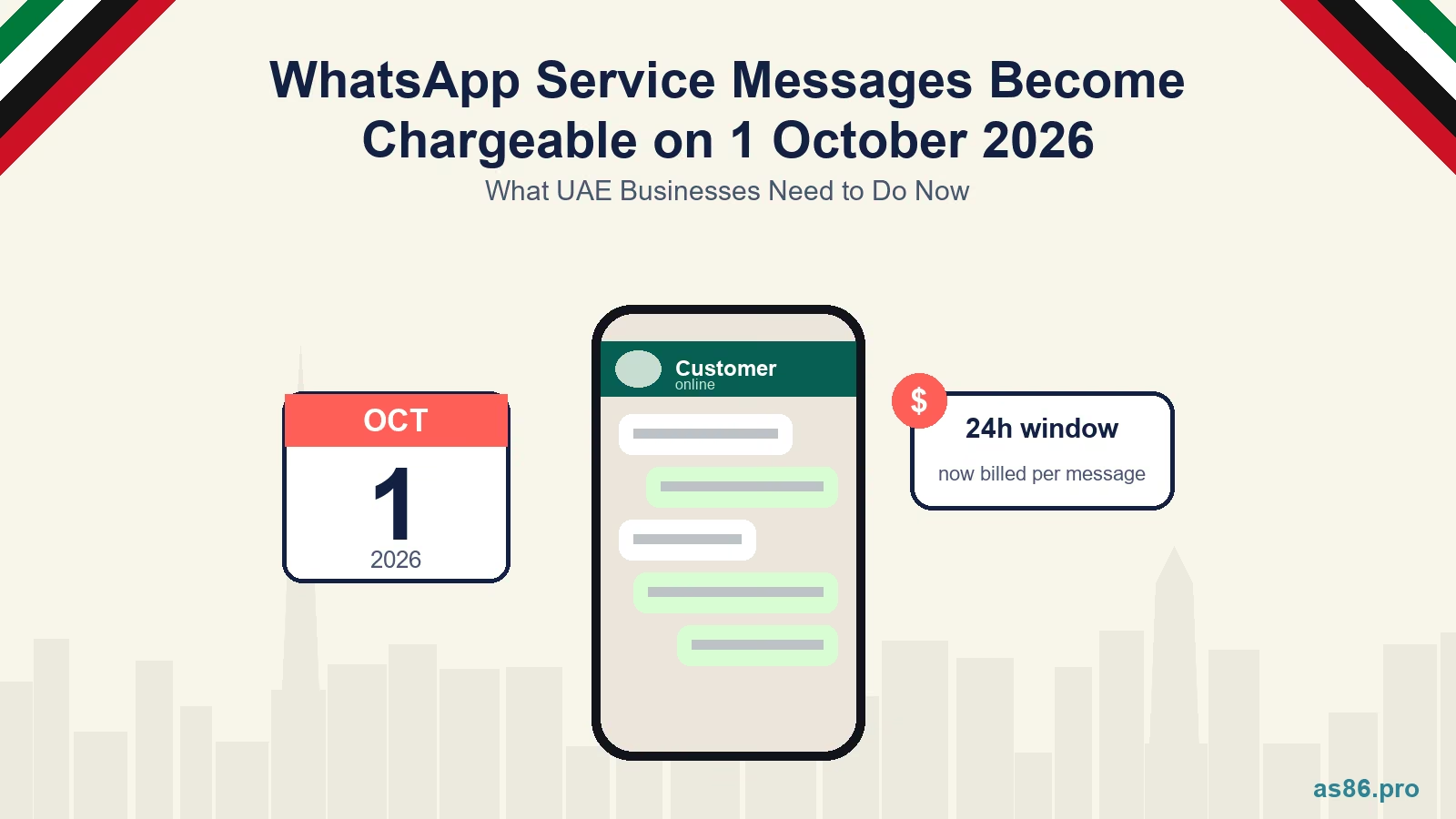 WhatsApp Service Messages Become Chargeable on 1 October 2026: What UAE Businesses Need to Do Now
-
 Canva AI Explained: A Practical Guide for Dubai Small Business Owners Who Aren't Designers
-
 TikTok Shop vs Instagram Shopping in the UAE: One Is Not Open Yet, So Where Should You Sell First?
Get a Growth Plan, Not Just a Quote
Seeking expert digital marketing, web design, or graphic design in the UAE? Let's discuss your project and deliver tailored solutions for measurable growth.
Book Free Consultation