
WhatsApp Service Messages Become Chargeable on 1 October 2026: What UAE Businesses Need to Do Now
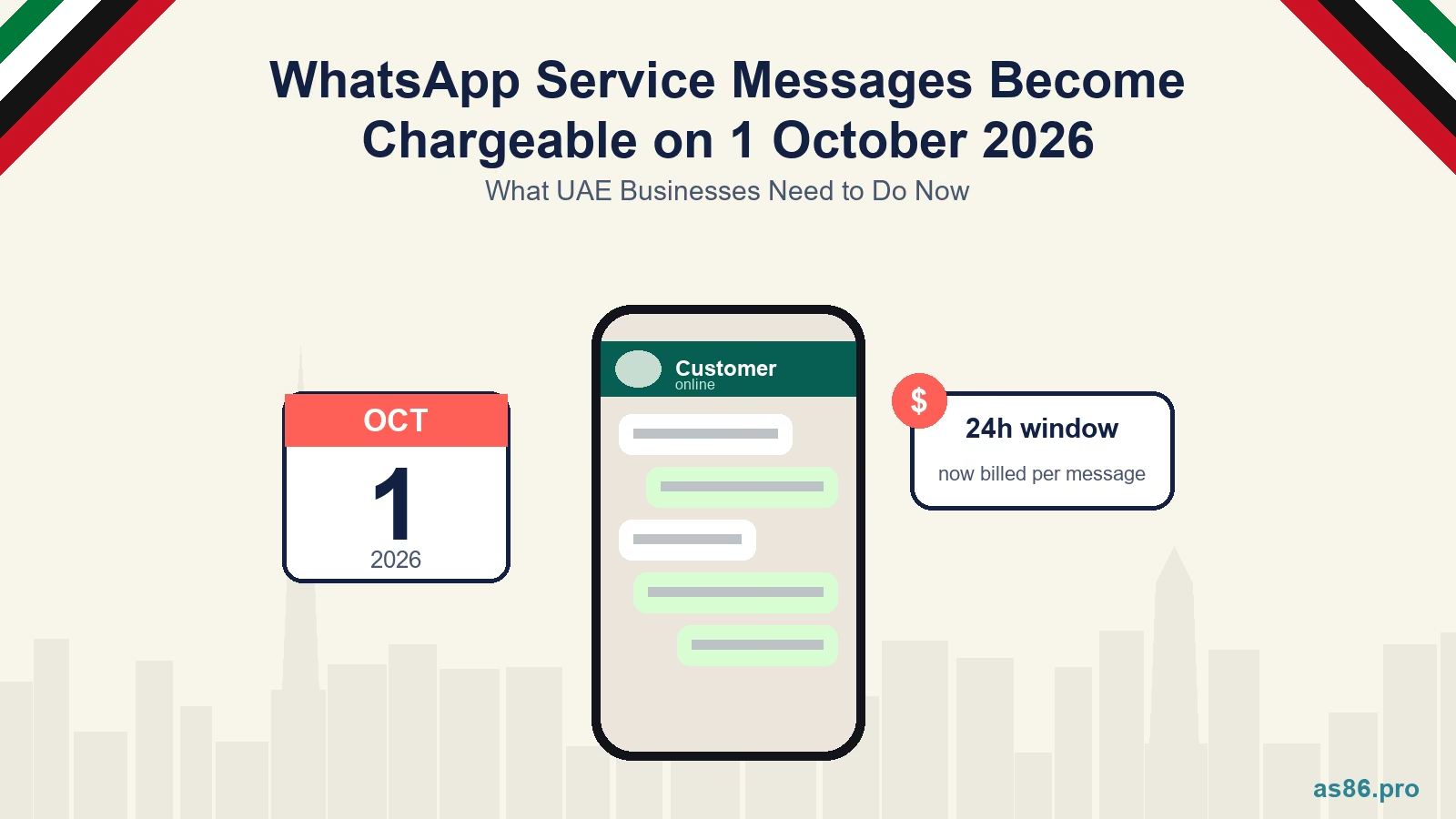
For nearly two years a UAE business using the WhatsApp Business Platform could answer a customer's message for free as long as it replied within 24 hours. On 1 October 2026 that changes. Meta has announced that it will start charging for service messages, and for utility templates sent inside that same 24-hour window. If your enquiries, bookings and order updates run through WhatsApp, this is a new line on your invoice, and the deadline is days away rather than months.
This post sets out what Meta has actually said, what is still unconfirmed, a way to estimate your own cost with your own numbers, and a checklist for this week. I have separated what comes from Meta's developer documentation from what comes from third-party guides, because a few details being repeated online are not on Meta's page.
WhatsApp's 24-Hour Window Pricing Change: What Changes on 1 October 2026
What Meta Has Confirmed
Meta's developer documentation has a dedicated notice titled "Upcoming pricing updates for Meta Business Agent, service and utility messages". As of 20 September 2026 it says the following:
Service messages become chargeable. "Effective October 1, 2026, Meta will charge for service messages." A service message is a free-form, non-template reply you send while the 24-hour customer service window is open. That window opens when a customer messages you and resets each time they message again. Nothing about the window itself changes: it still decides when you may send a free-form message. Only the price of what you send inside it changes.
Utility templates sent inside the window become chargeable. The same notice says Meta will charge for utility messages sent in response to users within an open 24-hour customer service window. A utility template is a pre-approved message for something like an order update or a booking confirmation.
The rate is the utility rate for the market. Meta states that rates for service messages are the same as the rates for utility and authentication messages, by market, and that it will not offer volume tiers for service messages. Volume tiers continue for utility and authentication messages. Charges apply per delivered message.
The rate cards were due by 1 September 2026. Meta said it would publish the rates that take effect on 1 October by 1 September, so the actual figures for your market are on Meta's rate card now.
An earlier change is already live. The same notice says that from 1 August 2026 Meta charges all businesses for Meta Business Agent messages. If you have switched that feature on, check your August invoice.
One warning about reading Meta's documentation: the main "Pricing on the WhatsApp Business Platform" page, when I opened it, still described the earlier position, in which non-template messages inside an open window are free. The dedicated notice is the newer one and is the one that carries the October dates. If two Meta pages appear to disagree, follow the dated notice and confirm with your provider.
What I Could Not Confirm From Meta's Page
A free monthly allowance. Several third-party guides say each business phone number gets 1,000 free service messages a month and that charging starts at the 1,001st. That figure does not appear on Meta's notice as I read it. It may be right, but do not budget around it until your provider or Meta's own documentation confirms it.
A payment-method deadline. A search summary of Meta's documentation suggested that businesses without a payment method on file by 30 September 2026 would stop having service messages delivered when charging starts. I could not find that sentence on the page I opened. Because the consequence would be messages not arriving, treat it as a reason to check your billing setup this week, not as a confirmed rule.
Click-to-WhatsApp ad traffic. One summary says the free entry-point window for conversations started from ads is unchanged. I could not verify that against Meta's page, and it matters for anyone running the kind of campaign I described in the Ezee Hire Meta Ads case study. Ask your provider to confirm how ad-originated conversations are billed.
Who is affected. The pricing is for the WhatsApp Business Platform, the API used through Meta or a business solution provider. Third-party guides state that the free WhatsApp Business app and WhatsApp Web are not affected. That fits the scope of the notice, but check with whoever set up your WhatsApp if you are unsure which one you use.
Estimating What It Could Cost You
You need three numbers: how many customer conversations you handle a month, how many business messages you send per conversation inside the window, and your market's rate. The third number is on Meta's rate card. For the UAE, one third-party tracker lists the utility rate at roughly US$0.05 per message, which is about AED 0.18. Treat that as a placeholder until you read the rate card yourself, and remember that a solution provider may add its own fee on top.
Here are two illustrative examples. The rate is the placeholder above and the volumes are assumptions:
| Assumption | Small clinic or salon | Busy online store |
|---|---|---|
| Customer conversations per month | 300 | 5,000 |
| Business messages per conversation, inside the window | 6 | 6 |
| Chargeable messages per month | 1,800 | 30,000 |
| Placeholder rate per message | US$0.05 | US$0.05 |
| Monthly cost (before any free allowance) | about US$90 (AED 330) | about US$1,500 (AED 5,500) |
The first figure is a rounding error for most businesses. The second is a real cost that has to be priced into what each conversation is worth. The pattern that matters is that the bill scales with the number of messages, not the number of customers. A conversation that takes eight short replies costs more than one that takes three, so how you design the conversation now has a direct price.
How to Keep the Bill Down Without Hurting Service
Answer more per message. Three short replies cost three times as much as one complete one. Write replies that resolve the question, with the price, the time and the next step together.
Push repeat questions to a page. Opening hours, delivery areas, prices and returns rules belong on your website or in an automatic first reply that links to it. Your website should do more of the answering than it probably does.
Use structured replies carefully. Buttons and lists can shorten a conversation by moving the customer to the answer faster, but each message you send is still a message. Test whether a menu reduces total messages or only adds one.
Stop sending confirmations nobody reads. Automatic "we received your message" replies, duplicated order updates and reminders that repeat what the customer already knows now cost money. Keep the ones that prevent a support message or a no-show.
Track what a conversation earns. If you do not measure revenue per conversation, you cannot judge whether a cost per message is fine or painful. My guide to tracking WhatsApp leads in Google Ads covers how to tie a chat to a lead and a sale, and the messaging cost becomes one more line in your cost per qualified lead.
What to Do This Week
1. Find out which WhatsApp product you use. If you send and receive through a platform or a provider, you are on the Business Platform. If you only use the phone app, ask your provider or check with whoever set it up.
2. Ask your provider three questions in writing. What will service messages cost for the UAE from 1 October, is a payment method or a balance required before then, and how are ad-originated conversations billed.
3. Pull your volume. Download the last three months of conversation and message counts from your provider and compute messages per conversation. That is the number in the table above that only you have.
4. Fix the noisiest flows first. Look at the conversations with the most messages and see whether a better first reply, a link or a merged message would shorten them.
5. Update your cost per lead. Add the estimated messaging cost per conversation to your campaign reporting so the margin you see in October is the real one.
Frequently Asked Questions
Next Step
If WhatsApp is a main enquiry channel for your business, it is worth reviewing the flows, the reporting and the ad tracking together before the change lands. My social media management service covers WhatsApp click-to-chat campaigns and how they are measured. Send me your current setup and I will tell you where the messages, and the money, are going.
Related reading:

Written by Amir Sibaee
Google Ads & Media Buying Specialist · SEO/SEM · Marketing Automation ·...
More about Amir →Related Reading


Want this done for your business? See my Social Media Management services in Dubai.
Latest Posts
-
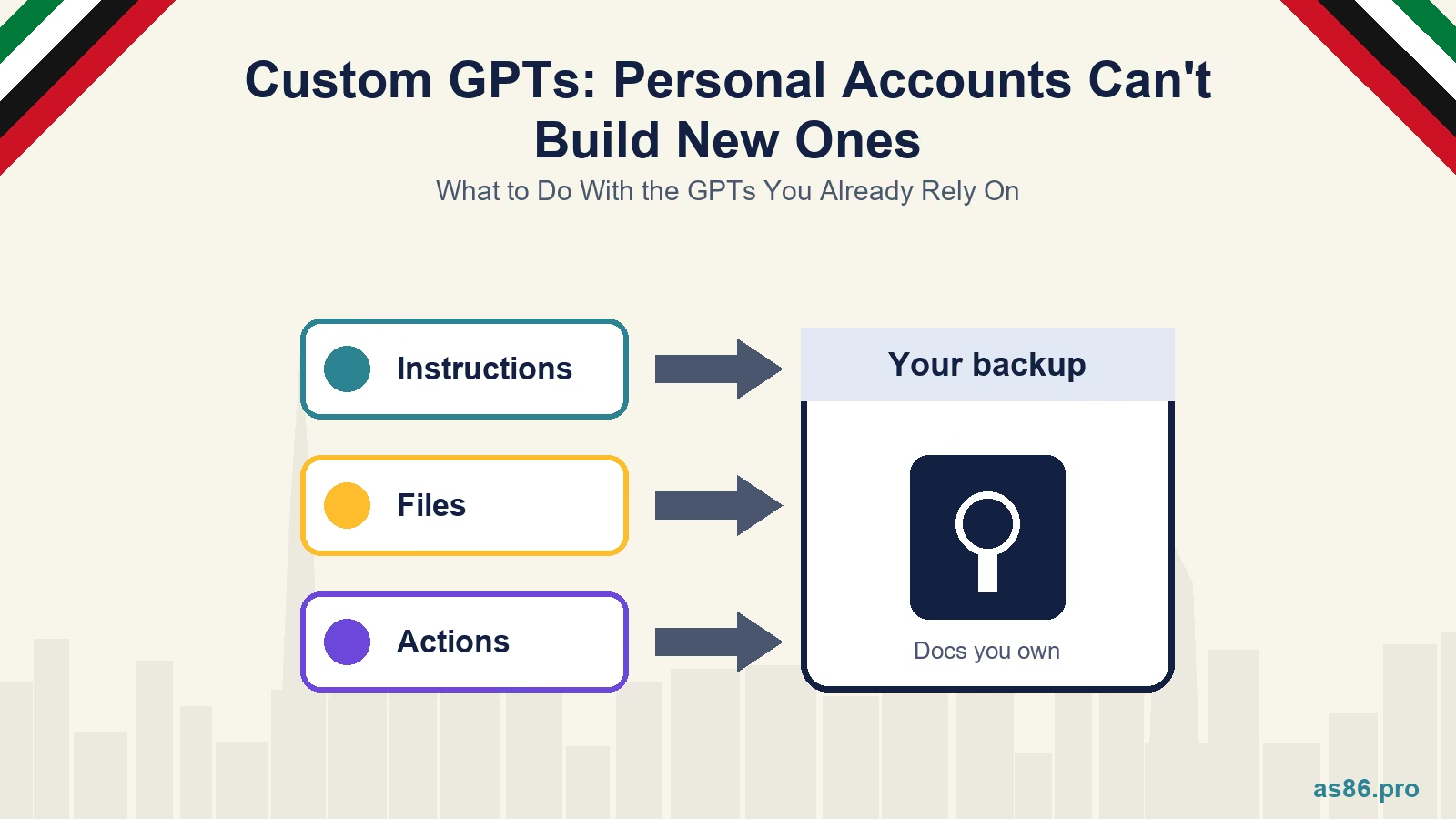 ChatGPT Custom GPTs: Personal Accounts Can't Build New Ones. What to Do With the GPTs You Already Rely On
-
 Canva AI Explained: A Practical Guide for Dubai Small Business Owners Who Aren't Designers
-
 TikTok Shop vs Instagram Shopping in the UAE: Which Should Your Brand Sell On First?
-
 How to Set Up TikTok Shop in the UAE: A Step-by-Step 2026 Seller Guide
-
 Google Consent Mode v2 Setup Guide for Dubai Websites Advertising to the EU
Get a Growth Plan, Not Just a Quote
Seeking expert digital marketing, web design, or graphic design in the UAE? Let's discuss your project and deliver tailored solutions for measurable growth.
Book Free Consultation