
Performance Max in 2026: Asset Experiments, New Audience Exclusions, and What Actually Changed
My Performance Max competitor playbook still holds on the fundamentals. But Google has shipped enough to Performance Max in 2026 that leaving that post to go stale would be a disservice, so this is the update: what is new, what each change is good for, what I could and could not confirm, and what to do about it in a UAE account.
I have also rewritten this post since it was first published. The first version was short and made one claim that Google's own documentation does not support (that asset experiments run within your existing budget), so I have removed it and marked what remains unconfirmed.
Performance Max in 2026: What Changed and What to Do About It
The Changes That Matter
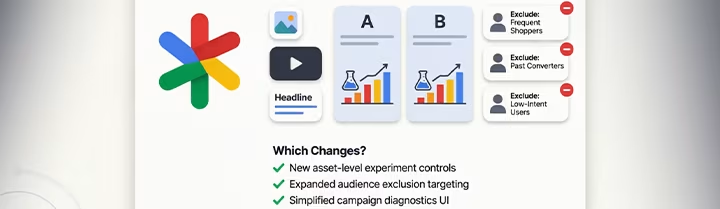
1. A/B testing for assets (Beta). Performance Max now has a built-in way to test creative inside one asset group. Google's help article describes three groups of assets. Control assets are a selection of your existing assets that you want to use as a reference. Treatment assets are the ones you want to compare against them, which can be existing or new. Common assets are everything you do not select for either side, and they keep serving to 100 percent of the campaign's traffic alongside the two test groups. You define the traffic split between the control and treatment arms. Search Engine Land first reported the feature being spotted in January 2026, as an expansion of an asset test that had been limited to retail campaigns.
2. "Your data exclusions" for audiences. This is a campaign setting, under the demographic exclusions, that lets you exclude your own first-party lists from a Performance Max campaign: Website Visitor lists and Customer Match lists. The important change is what it does. Before, adding a Customer Match list to Performance Max worked as an audience signal, a hint to the system. This is an exclusion. It was first reported in accounts in January 2026, and reports at the time said it was rolling out gradually, so check whether your account has it yet.
3. More reporting. Trade coverage of Google's spring 2026 announcement lists a budget report that projects month-end spend from current pacing and lets you model a budget change, age and gender breakdowns in the audience report, and a placement report that shows which network each placement belongs to. One industry summary also reports that the video limit per asset group rose from 5 to 15. I have not verified that last figure against Google's documentation, so confirm it in your own asset groups.
Two Different Things Called "Data Exclusions"
Google Ads already has a tool called data exclusions inside Smart Bidding. It tells the bidding system to ignore a period of bad conversion data, for example after a tracking outage. It has nothing to do with the audience setting above, and searching for "data exclusions" will bring up both. If you are following a guide, check which one it means before you change anything.
How to Run a Useful Asset Experiment
The tool makes testing easy to start and easy to misread. This is how I would set one up:
Choose one asset group with enough volume. An experiment can only test assets in a single asset group. If that group produces a handful of conversions a month, a four to six week test will not settle anything. Test where there is enough data to see a difference.
Change one thing. Put your current headlines and images in control, and the same set with one deliberate change in treatment: a price-led message against a service-led message, video against static, a WhatsApp call to action against a form. If you change three things you will not know which one moved the result.
Give it time. Google recommends running the experiment for a minimum of four to six weeks, and the system calculates an end date based on what it needs to reach a statistically meaningful result. Short tests in low-volume accounts tend to produce noise, so do not call a winner in week two.
Decide the metric first. Pick conversions, cost per conversion or conversion value before you start, not after you have seen the numbers. Clicks and impressions will not tell you whether the creative worked.
Do not change other things during the test. Budget, bidding strategy and targeting changes in the middle of an experiment make the result hard to trust.
Check eligibility. Google's help article says campaigns with shared budgets, portfolio bidding strategies or Smart Bidding Exploration cannot use the feature. If your account leans on portfolio bidding, this tool may not be available on your best campaigns.
For a UAE account, the most useful early test is usually the offer or the angle, not the wording. Bilingual businesses should also review how English and Arabic assets are being served, which the September language-targeting change makes more important. I covered that in the language targeting post.
Using "Your Data Exclusions" Well
The setting matters most when you want Performance Max to find new customers rather than harvest people who already know you. A sensible arrangement is one Performance Max campaign aimed at new customers, with your customer and existing high-intent remarketing lists excluded, and a separate campaign, possibly with a different offer, that deliberately addresses existing customers.
Expect reported ROAS to change. Existing customers and recent visitors convert cheaply, so excluding them usually lowers the reported return of that campaign. That is the point. Judge the campaign on new-customer conversions and blended acquisition cost across the account, not on the headline ROAS you had before.
Keep the lists fresh. An exclusion is only as good as the list behind it. If your customer list was uploaded months ago, recent buyers are not on it and Performance Max will keep showing them ads.
Mind consent. Customer Match lists are built from personal data. Make sure your consent and data practices cover how you collect and upload them. I explained what that involves in the posts on UAE PDPL compliance for marketers and Google Consent Mode v2.
What Has Not Changed
The core advice from the original playbook still applies: feed Performance Max good creative, give it clean conversion data to optimise against, and do not expect keyword-level control the way a Search campaign gives you. These additions give you more control over testing and audiences, not a different model. The same holds for the Search side, where the AI Max upgrade is changing how queries are matched. Neither change replaces the basics of accurate tracking and regular review.
What to Do This Week
Look in your account. Open a Performance Max campaign's settings and check whether "Your data exclusions" appears, and whether the asset testing option is available.
Pick one test. Choose the asset group with the most conversions and write down one change, one metric and a start date.
Refresh your lists. Update your customer list before you use it as an exclusion.
Split acquisition from retention. If one campaign is doing both jobs, decide whether it should be two.
Frequently Asked Questions
Next Step
If your Performance Max campaigns have not been reviewed since they were set up, my Google Ads management service includes an audit that covers structure, assets, exclusions and testing. Tell me which campaigns you run and I will tell you what I would look at first.
Related reading:

Written by Amir Sibaee
Google Ads & Media Buying Specialist · SEO/SEM · Marketing Automation ·...
More about Amir →Related Reading
-
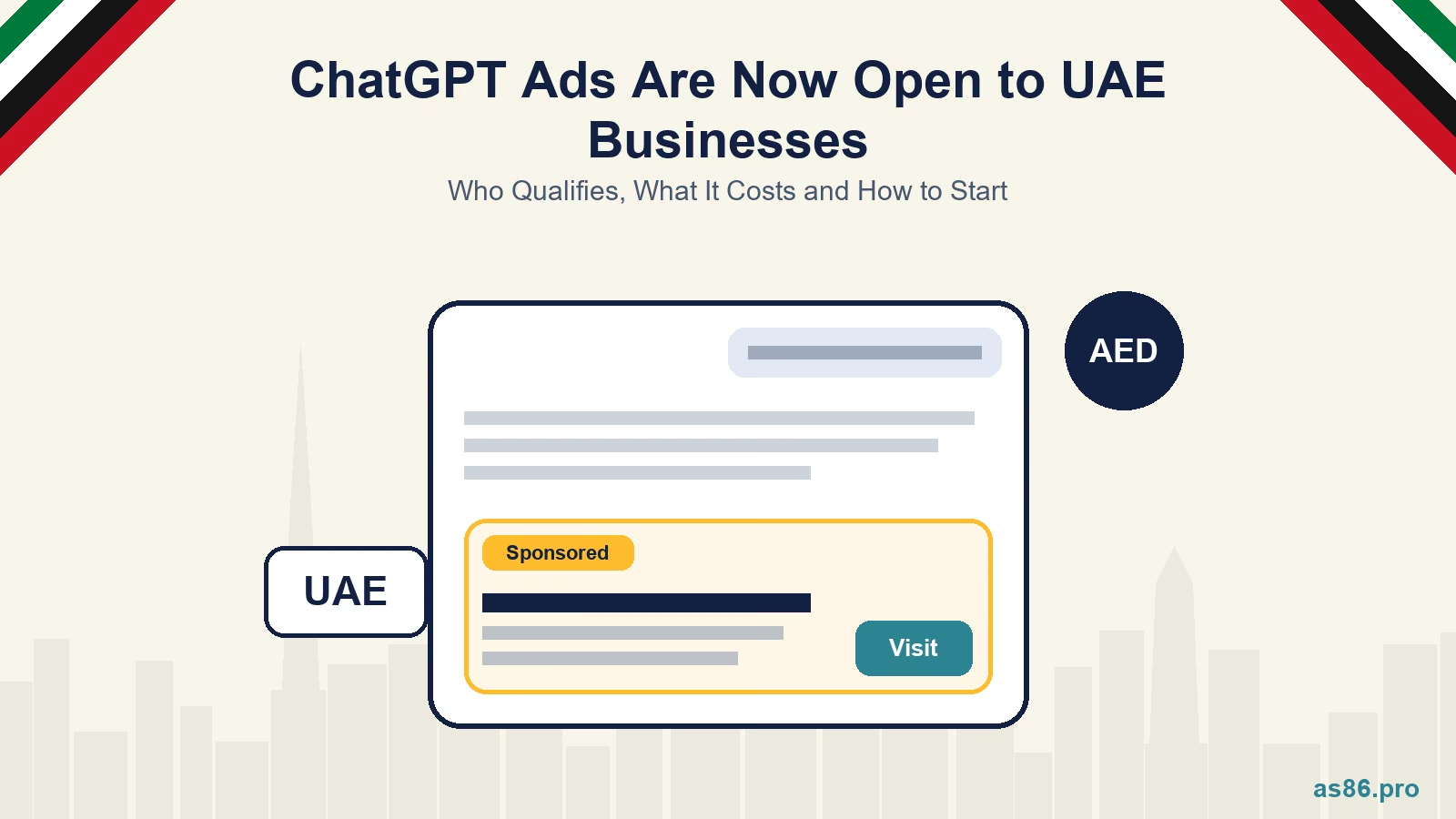 OpenAI Ads Are Now Open in the UAE: What ChatGPT Advertising Costs, Who Qualifies and How to Start
-
 RSA Search Term Categories Dubai 2026: Cut Wasted PPC Spend in UAE
-
 Google Ads Is Removing Language Targeting From Search in September 2026 & What It Means for Your EN/AR Campaigns
-
 Performance Max Competitor Playbook: Reach Your Rival’s Shoppers (Without Breaking the Rules)
Want this done for your business? See my Search Engine Marketing services in Dubai.
Latest Posts
-
OpenAI Ads Are Now Open in the UAE: What ChatGPT Advertising Costs, Who Qualifies and How to Start
-
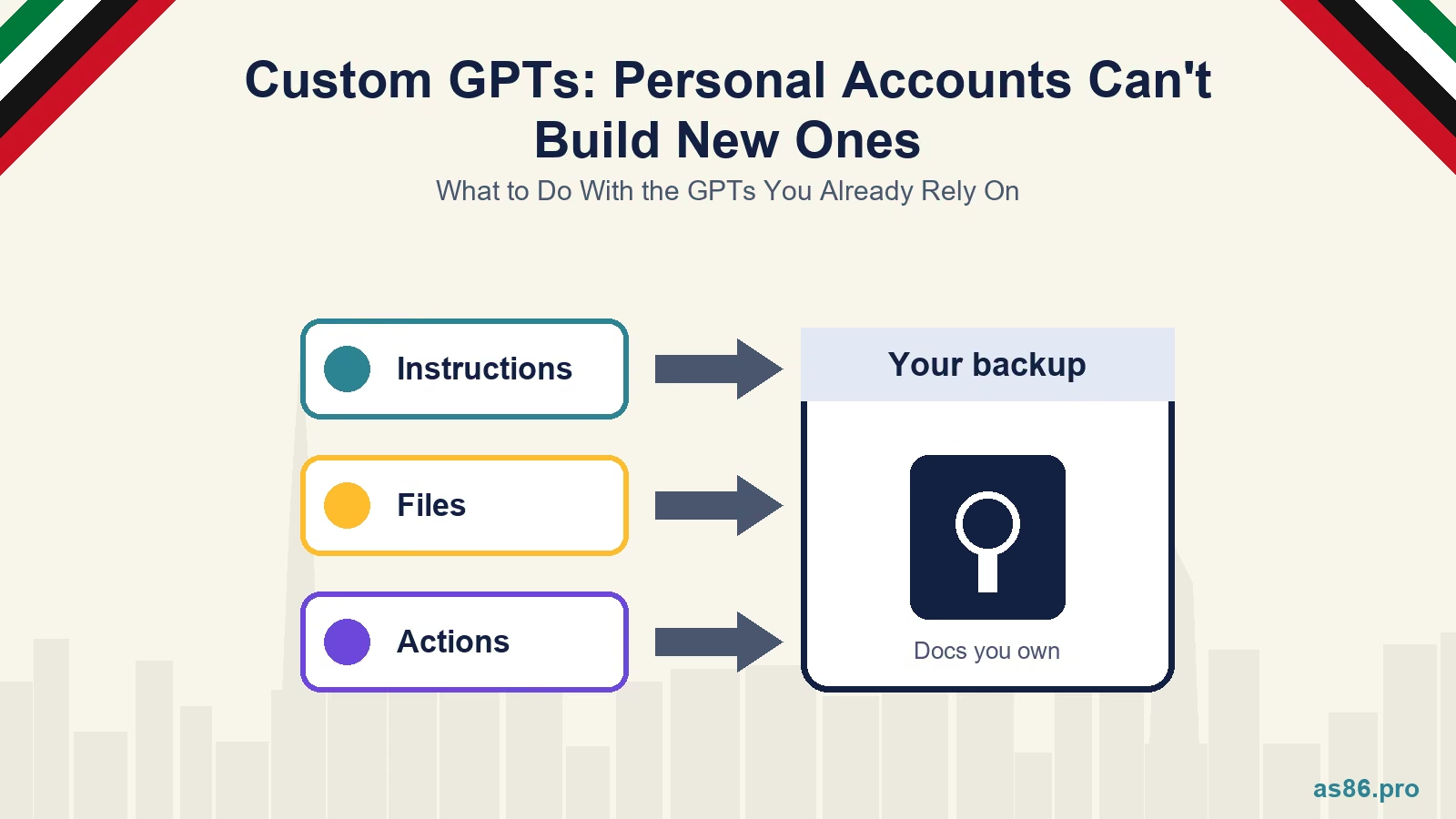 ChatGPT Custom GPTs: Personal Accounts Can't Build New Ones. What to Do With the GPTs You Already Rely On
-
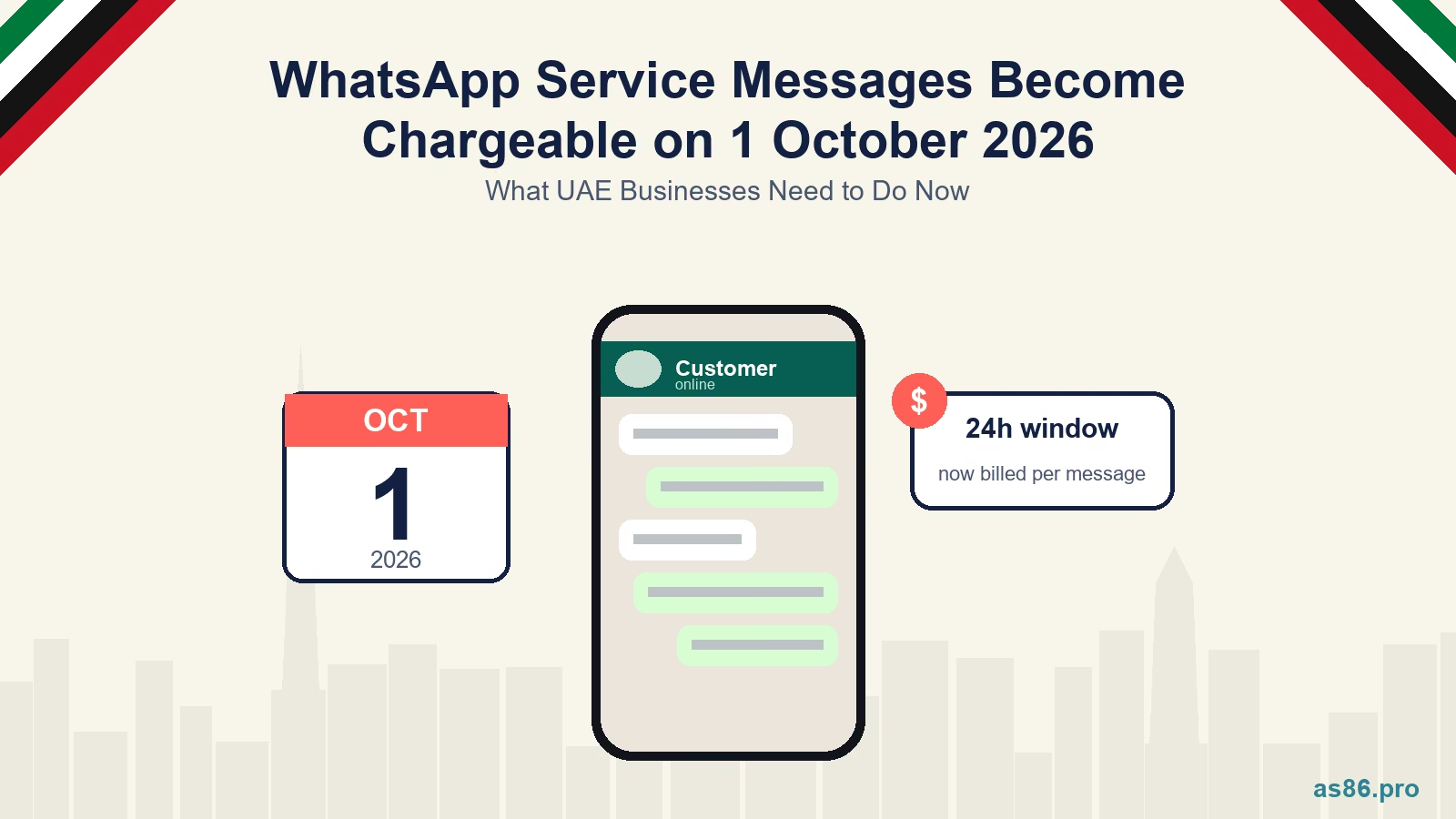 WhatsApp Service Messages Become Chargeable on 1 October 2026: What UAE Businesses Need to Do Now
-
 Canva AI Explained: A Practical Guide for Dubai Small Business Owners Who Aren't Designers
-
 TikTok Shop vs Instagram Shopping in the UAE: One Is Not Open Yet, So Where Should You Sell First?
Get a Growth Plan, Not Just a Quote
Seeking expert digital marketing, web design, or graphic design in the UAE? Let's discuss your project and deliver tailored solutions for measurable growth.
Book Free Consultation