
WordPress Uptime & Speed: A Dubai Business Owner's Monitoring Checklist

A Dubai villa cleaning company just launched a Google Ads campaign timed for the pre-Ramadan spring-cleaning rush. Budget is flowing, cost-per-click is already high because half of Dubai's home services businesses are bidding on the same keywords, and for six hours nobody notices the site has been returning a server error. By the time someone checks, the campaign has burned through a meaningful chunk of the week's budget sending clicks to a page that never loaded. Nobody was ignoring the problem. Nobody was watching for it, because nothing was set up to tell them.
This is the single most common, most avoidable failure mode for small business WordPress sites in the UAE: not a lack of hosting quality, but a lack of monitoring. A site can be reasonably well hosted and still go down (plugins conflict, certificates expire, traffic spikes exceed a resource limit), but a business with proper monitoring finds out in minutes. A business without it finds out from a customer complaint, or worse, from a quiet decline in leads nobody connects to a six-hour outage from two weeks ago.
This checklist is built for the non-technical Dubai business owner or marketing manager: what to monitor, what tools to use, what “good” looks like for Core Web Vitals on a mobile-heavy UAE audience, and a realistic monthly routine that doesn't require a developer on staff.
Why Uptime Monitoring Isn't Optional in a Paid-Media Market Like Dubai
Dubai has some of the highest cost-per-click rates in the region across categories like real estate, legal, healthcare, home services, and education. Every click sent to a broken or slow-loading page is money spent for zero return. Unlike an organic visitor who might come back later, a paid click is gone the moment it's spent. Monitoring isn't a “nice to have” technical add-on; it's the mechanism that turns an invisible six-hour outage into a same-hour fix instead of a same-month discovery.
What Actually Causes Most WordPress Downtime for Small Business Sites
In my experience managing WordPress sites for Dubai SMEs, downtime rarely comes from dramatic, exotic causes. It's almost always one of a handful of predictable culprits:
- Plugin or theme conflicts: an update to one plugin breaks compatibility with another, producing a white screen or fatal error.
- Shared hosting resource limits: a traffic spike (from a successful ad, a press mention, or a bot crawl) exceeds the memory or CPU allowance on a budget shared plan, and the site goes down until the limit resets.
- Expired SSL certificates: an auto-renewal silently fails, browsers start blocking the site with a security warning, and both visitors and Google Ads treat it as broken.
- DNS misconfiguration: a change made during a domain transfer, email setup, or CDN migration that quietly breaks resolution for some or all visitors.
- Malware or a compromised plugin: an infected site gets blacklisted by Google Safe Browsing, or the hosting provider itself suspends the account.
- Host-side outages: the hosting provider's own infrastructure has an incident, and a site with no independent monitoring has no way to know except by chance.
The Monitoring Tools Worth Using (and What They Cost)
None of the tools below require technical expertise to set up and read. This is the practical stack:
- An uptime monitor, such as UptimeRobot, Pingdom, or StatusCake, pings your site every one to five minutes and sends an instant SMS, email, or WhatsApp-integrated alert the moment it stops responding. Basic tiers are free or a few dollars a month, and this is the single highest-value tool on this list.
- Google Search Console: free, and it flags indexing errors, security issues, and mobile usability problems, several of which correlate directly with hosting or performance issues.
- Google PageSpeed Insights / Core Web Vitals report: free, and it shows real-world Core Web Vitals data pulled from actual Chrome users visiting your site, not just a lab simulation.
- Your host's status page and SLA documentation: bookmark it. If your host doesn't publish one, that's itself a signal about the maturity of the hosting operation.
Core Web Vitals Thresholds That Matter for Mobile-Heavy UAE Traffic
The UAE has one of the highest mobile internet usage rates in the world, and for most Dubai SME sites, mobile traffic makes up the clear majority of visits, often the majority of ad clicks specifically, since both Google and Meta campaigns skew heavily toward mobile placements here. That makes Core Web Vitals a direct proxy for how much of your paid traffic actually experiences a usable page rather than bouncing before it loads.
The three metrics worth tracking monthly:
- Largest Contentful Paint (LCP): how long the main content takes to load. Good: under 2.5 seconds. UAE mobile networks are generally fast, so a slow LCP is almost always a hosting or unoptimized-image problem, not a network problem.
- Interaction to Next Paint (INP): how responsive the page feels when a visitor taps a button or link. Good: under 200 milliseconds. This matters especially for WhatsApp click-to-chat buttons and lead forms, where a laggy tap directly costs conversions.
- Cumulative Layout Shift (CLS): how much the page visually jumps around while loading. Good: under 0.1. A common culprit on WordPress sites is ads or images loading without reserved space, which pushes a “Call Now” button out from under a visitor's thumb right as they try to tap it.
If your site is consistently missing these thresholds on mobile, the fix is rarely “write less content.” It's almost always image optimization, caching, and a properly configured CDN, all of which fall squarely under hosting management rather than content strategy.
How Downtime During a Live Campaign Burns Budget: A Walkthrough
Here's how a single unmonitored outage compounds, step by step, for a typical Dubai SME running an active Google Ads campaign:
- A plugin auto-update triggers a fatal PHP error at 9:00 AM, taking the site fully offline.
- Google Ads keeps serving the campaign as normal, since the platform has no way of knowing the destination page is broken unless a specific ad-level monitoring integration is set up.
- Clicks continue arriving and being charged at full cost-per-click for every hour the outage goes unnoticed.
- Google's systems eventually detect the broken landing page experience through automated crawls, which can also start suppressing ad delivery or lowering Quality Score, a penalty that persists even after the site is fixed.
- By the time a customer complaint or a manual check reveals the outage, hours or even a full business day may have passed, along with the ad spend, the leads, and a Quality Score hit that raises future cost-per-click.
An uptime monitor with SMS or WhatsApp alerts turns step 1 into step 2: a five-minute detection window instead of a multi-hour one, and a fix before the campaign budget or Quality Score take meaningful damage.
The Monthly Monitoring Checklist for Non-Technical Owners
This is the routine I recommend to Dubai business owners who don't have an in-house developer. None of it requires code:
- Confirm your uptime monitor is active and alerts are going to a phone number or inbox someone actually checks daily.
- Review the uptime monitor's monthly report: look for any outages, even short ones, and note the time of day they occurred.
- Run your homepage and top landing page through Google PageSpeed Insights; note your LCP, INP, and CLS scores against the thresholds above.
- Check Google Search Console for new security issues, manual actions, or a spike in crawl errors.
- Verify your SSL certificate's expiry date hasn't crept inside a 30-day window.
- Confirm your most recent backup exists and is dated within the last 24-48 hours.
- If you run bilingual EN/AR pages, spot-check that both language versions load correctly. A common failure mode is one language breaking silently while the other stays fine, which masks the problem from anyone checking only the English site.
- If any item fails two months running, that's the signal to escalate from “self-monitored” to a properly managed hosting arrangement.
When to Escalate to a Managed Hosting Provider
A monthly self-check routine is enough for a stable, low-traffic site. It stops being enough the moment you're running paid campaigns at meaningful budget, adding e-commerce or booking functionality, or simply don't have the time to run the checklist consistently every month. At that point, the cost of a missed outage during a campaign almost always exceeds the cost of proper managed hosting. I cover exactly what a genuine managed hosting setup should include (security hardening, tested backups, uptime SLAs, and patching cadence) in my companion guide, Managed WordPress Hosting in Dubai: What “Managed” Actually Means in 2026, and my Web Hosting Administration service handles the entire monitoring and maintenance routine above on your behalf, with 24/7 uptime monitoring built in.
Who This Checklist Is For
This is built for Dubai business owners and marketing managers running or planning paid campaigns on a WordPress site, without a developer on staff to watch server health day to day. If you already have a managed hosting provider handling monitoring for you, use this as a way to verify what you're actually being covered for. Not every “managed” plan includes real monitoring, which is exactly the gap I cover in the companion guide linked above.
Frequently Asked Questions
Stop Finding Out About Downtime From Your Customers
Book a free monitoring and hosting review at as86.pro or WhatsApp me on +971 52 130 0516. I’ll check your current uptime setup, Core Web Vitals, and backup routine, with bilingual service available in English and Arabic across all UAE markets.

Written by Amir Sibaee
Google Ads & Media Buying Specialist · SEO/SEM · Marketing Automation ·...
More about Amir →Related Reading



Want this done for your business? See my Web Design services in Dubai.
Latest Posts
-
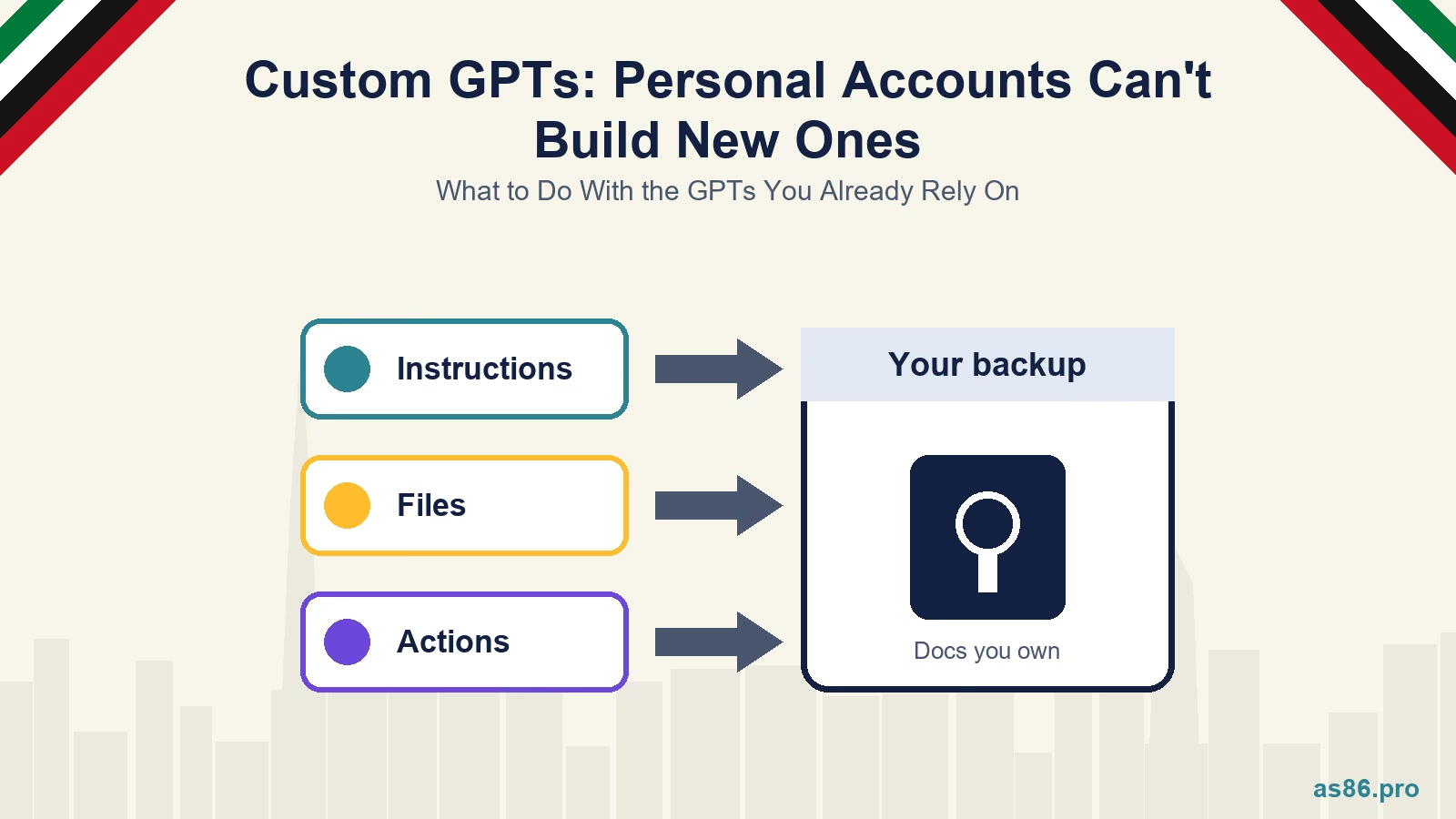 ChatGPT Custom GPTs: Personal Accounts Can't Build New Ones. What to Do With the GPTs You Already Rely On
-
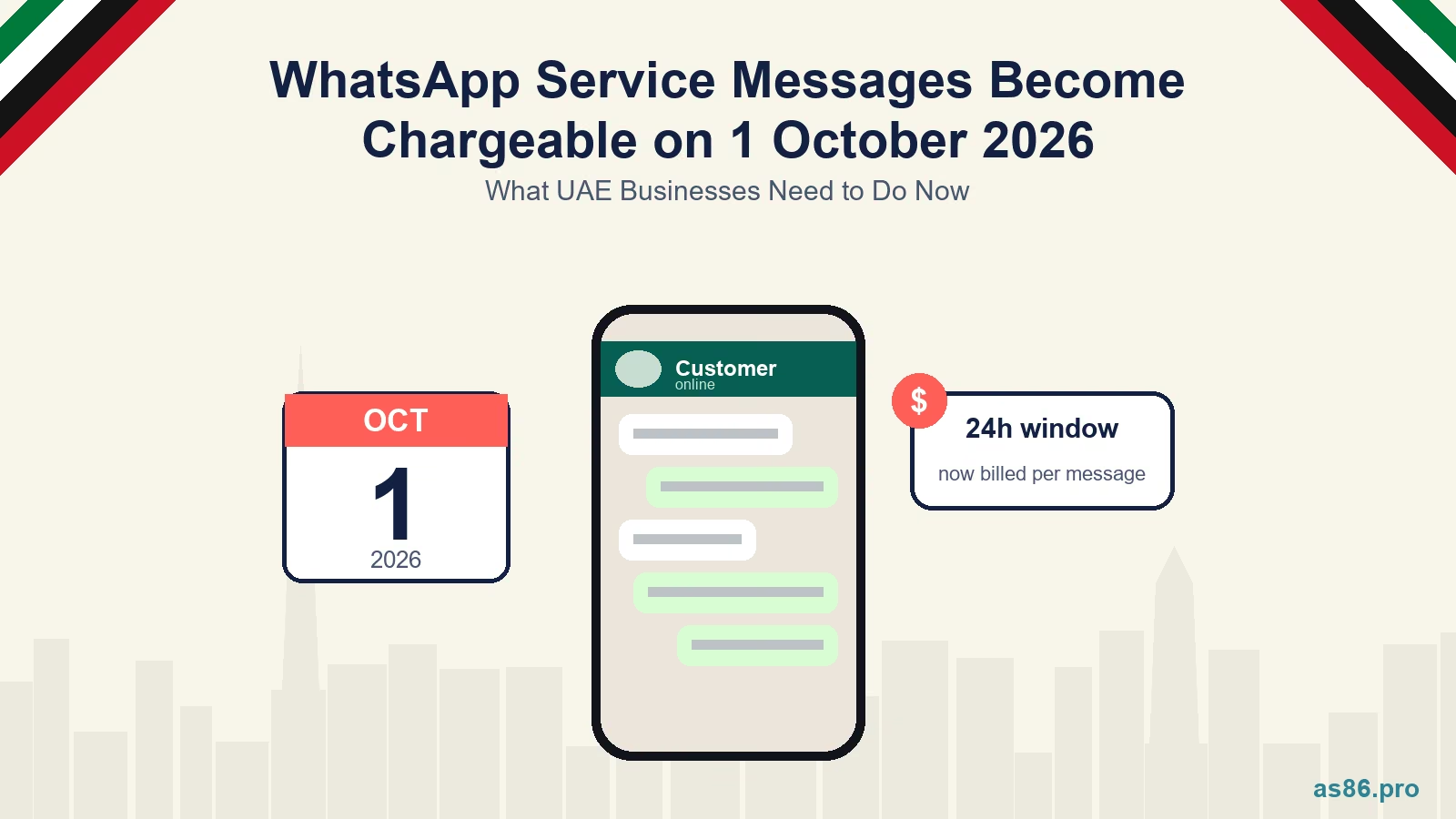 WhatsApp Service Messages Become Chargeable on 1 October 2026: What UAE Businesses Need to Do Now
-
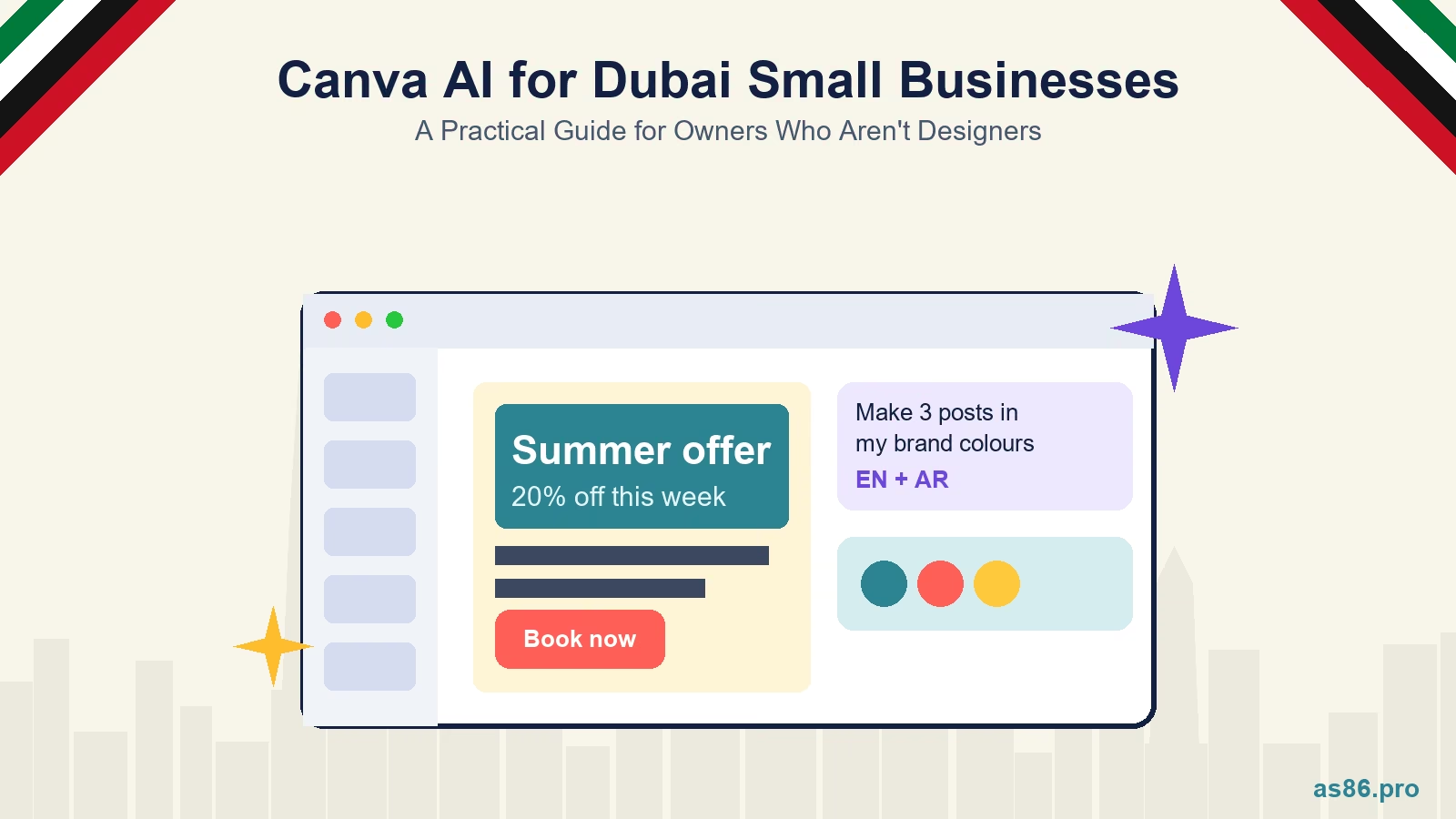 Canva AI Explained: A Practical Guide for Dubai Small Business Owners Who Aren't Designers
-
 TikTok Shop vs Instagram Shopping in the UAE: Which Should Your Brand Sell On First?
-
 How to Set Up TikTok Shop in the UAE: A Step-by-Step 2026 Seller Guide
Get a Growth Plan, Not Just a Quote
Seeking expert digital marketing, web design, or graphic design in the UAE? Let's discuss your project and deliver tailored solutions for measurable growth.
Book Free Consultation