
Google Says GEO Isn't a Separate Strategy From SEO: What That Actually Means for Dubai Businesses

Updated 20 September 2026. The first version of this post said only that Google had "stated plainly in 2026" that optimising for AI Overviews and AI Mode is still SEO. That statement now has a source: Google's guide "Optimizing for generative AI search", announced on 15 May 2026, and this post quotes it directly. Reading it also showed me that three things I wrote before go further than Google does, so I have removed them: that Google has no second crawler, that structured data matters exactly as before for AI results, and that you should restructure pages so passages can be lifted out.
GEO packages are being sold widely: Generative Engine Optimisation, AI search optimisation, AEO, whatever the proposal calls it this quarter. The pitch is that AI Overviews and AI Mode require a new skill you need to buy. If you have been offered one, or you are deciding whether to build one, it helps to know exactly what Google has said, what it has not said, and how to test a proposal against it.
Is GEO Different From SEO? What Google's Own Guide Says
The Statement
Google's guide says: "From Google Search's perspective, optimizing for generative AI search is optimizing for the search experience, and thus still SEO." It explains why: "best practices for SEO continue to be relevant because our generative AI features on Google Search are rooted in our core Search ranking and quality systems."
The guide describes two mechanisms behind those features. They use retrieval-augmented generation, which relies on Google's core Search ranking systems to retrieve relevant, up-to-date pages, and query fan-out, where the system runs several related searches at once to gather more results. In plain terms: the pages that feed an AI answer are picked by the same Search systems that pick ordinary results. There is no separate index to get into.
What Google Says You Do Not Need
This is the part most useful for judging a GEO proposal. The guide is explicit about several tactics that are being sold:
| Tactic | What Google's guide says |
|---|---|
| llms.txt and other AI text files, Markdown or special markup | "You don't need to create new machine readable files, AI text files, markup, or Markdown to appear in Google Search", and such files neither help nor harm visibility or rankings in Google Search |
| Special schema.org markup for AI features | Structured data is not required for generative AI search and there is no special schema markup to add |
| Breaking content into tiny pieces ("chunking") | No requirement to break content into tiny pieces for AI to understand it |
| Writing in a special way for AI | "You don't need to write in a specific way just for generative AI search" |
A note on my own site, since I write about this: it publishes an llms.txt file. Going by Google's guide, that file makes no difference to how Google Search ranks or shows the site. If a proposal lists "llms.txt" or "AI schema" as a deliverable that will improve your Google visibility, that line is not supported by Google's documentation.
What Google Recommends Instead
The guide's recommendations read like a normal SEO list. Grouped, they are:
Content. Create valuable, non-commodity content with a perspective people cannot get everywhere else. Make it helpful, reliable and written for people first. Organise it clearly with headings and sections, and add good images and video.
Technical. Meet Search's technical requirements, follow crawling best practices, keep content crawlable and not blocked, use semantic HTML where possible, follow JavaScript SEO best practices and reduce duplicate content.
Experience. Provide a good page experience across devices.
Business data. For local and e-commerce businesses, keep your details accurate through Google Business Profile and Merchant Center.
If this looks familiar, it should. My technical SEO checklist and the local SEO posts on this site cover the same ground.
What the Statement Does Not Cover
It is about Google Search. The guide covers Google's own generative AI features. It says nothing about how ChatGPT, Perplexity, Claude or other assistants find and cite sources. Those systems have their own retrieval methods, and I have not seen evidence from them that settles what helps. Anyone who tells you exactly how to be cited by them is either guessing or has data worth asking to see. I wrote about tracking that traffic in the GA4 AI assistant traffic guide.
It does not say the new formats are irrelevant. The way results are presented has changed, and it is reasonable to look at how your pages appear in AI Overviews and AI Mode. The guide's point is that the work behind a good appearance is SEO work, not that there is nothing to look at.
It does not say all GEO work is worthless. Some of what GEO vendors do is ordinary SEO under a new name, which is useful if it is done well. The issue is paying a premium for it as if it were something else.
How to Judge a GEO Proposal
1. Ask what exactly will change on your site. A list of concrete changes (pages rewritten, technical fixes, new content, tracking) is a plan. "Optimising for AI" is not.
2. Check the deliverables against Google's list. If the main items are llms.txt, special AI schema or rewriting every page in short blocks, none of those is supported by Google's guide as a way to improve Google visibility.
3. Ask how they will measure it. Google now offers a Generative AI performance report in Search Console. It shows how many times your pages appeared in AI Overviews and AI Mode, by page, country, device and date. It does not currently include clicks or queries. Google announced it on 3 June 2026 and says it was rolled out to all websites as of 31 August 2026, though sites with too few AI impressions may not see it. A proposal that ignores the report and promises "AI citations" without measuring anything is a warning sign.
4. Compare it with a normal SEO audit. If the "GEO audit" would produce the same findings as a technical and content audit, you may be buying the same work twice.
5. Be wary of guarantees. Nobody controls whether an AI system shows or cites your page. Promises of guaranteed placement are not credible.
What to Do Instead
Do SEO properly and treat visibility in AI features as one of the results. Concretely:
Fix the basics first. Make sure important pages are crawlable, indexable and fast. Google's guide puts technical requirements and crawling best practices on its list for a reason.
Publish something worth citing. Original perspective, real numbers and named expertise are the content signals the guide points to. My post on evolving your SEO for AI-driven discovery and the one on using AI-generated content without hurting your SEO go into how.
Keep your business data accurate. Google Business Profile and, for shops, Merchant Center are named directly in the guide.
Watch the report. Look at the Generative AI performance report monthly, compare impressions against your regular Performance report and note which pages appear.
What to Do This Week
Read the guide. Search for "Optimizing for generative AI search" in Google Search Central. It is short, and reading it yourself beats relying on any summary, including mine.
Open Search Console. Check whether the Generative AI performance report is available for your property.
Audit any proposal you hold. Compare its deliverables against the table above.
Pick your ten most important pages. Check they are indexed, fast and clearly written with something original to say.
Frequently Asked Questions
Next Step
If you have a GEO proposal and want a plain second opinion, or you want your own site checked against Google's list, my SEO service starts with an audit. Send me the proposal and I will tell you which parts are real work and which are not.
Related reading:

Written by Amir Sibaee
Google Ads & Media Buying Specialist · SEO/SEM · Marketing Automation ·...
More about Amir →Related Reading
-
 AI Overviews vs AI Mode: What Changed in Google Search in 2026 (And What Dubai Businesses Should Do About It)
-
 Top 10 Evergreen SEO Strategies That Still Work in Dubai
-
 Google FAQ Rich Results Dead from May 2026: What Dubai SEOs Must Do Now
-
 The Same But Different: Evolving Your SEO for AI-Driven Discovery (Dubai Edition)
Want this done for your business? See my Search Engine Optimization services in Dubai.
Latest Posts
-
 OpenAI Ads Are Now Open in the UAE: What ChatGPT Advertising Costs, Who Qualifies and How to Start
-
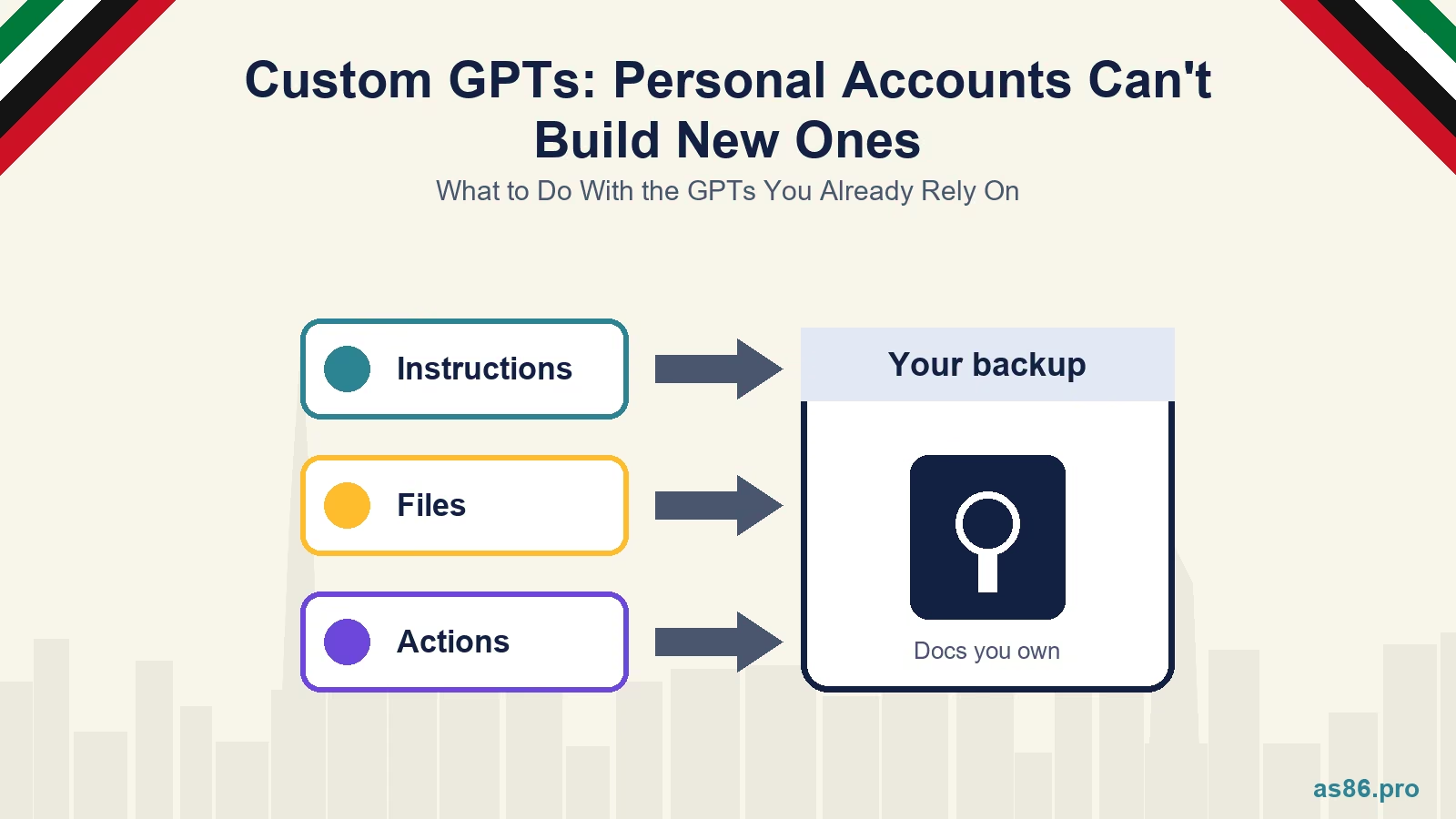 ChatGPT Custom GPTs: Personal Accounts Can't Build New Ones. What to Do With the GPTs You Already Rely On
-
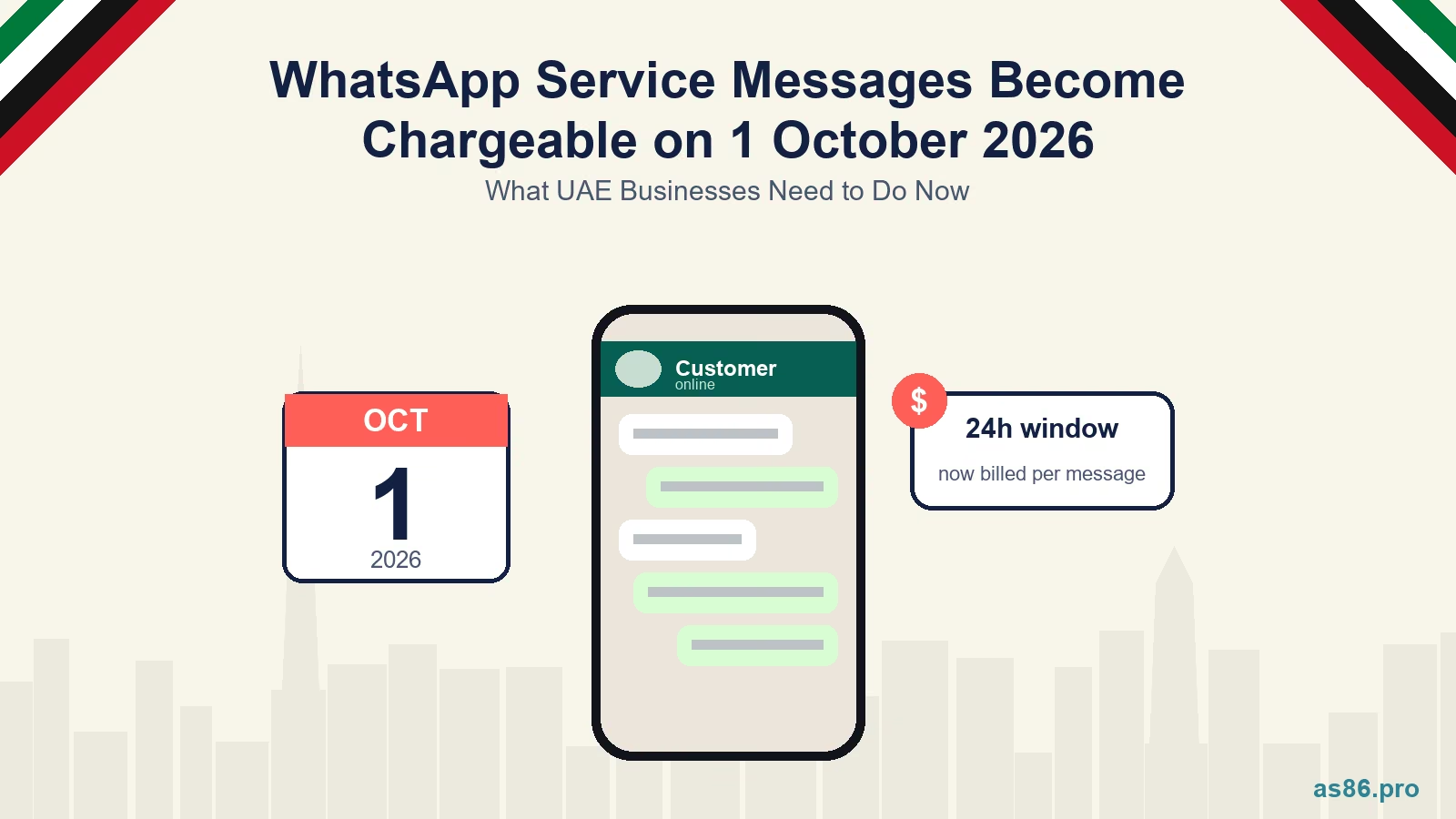 WhatsApp Service Messages Become Chargeable on 1 October 2026: What UAE Businesses Need to Do Now
-
 Canva AI Explained: A Practical Guide for Dubai Small Business Owners Who Aren't Designers
-
 TikTok Shop vs Instagram Shopping in the UAE: One Is Not Open Yet, So Where Should You Sell First?
Tags
Get a Growth Plan, Not Just a Quote
Seeking expert digital marketing, web design, or graphic design in the UAE? Let's discuss your project and deliver tailored solutions for measurable growth.
Book Free Consultation