
Ramadan 2027 Marketing Strategy for Dubai Businesses: The Complete Playbook
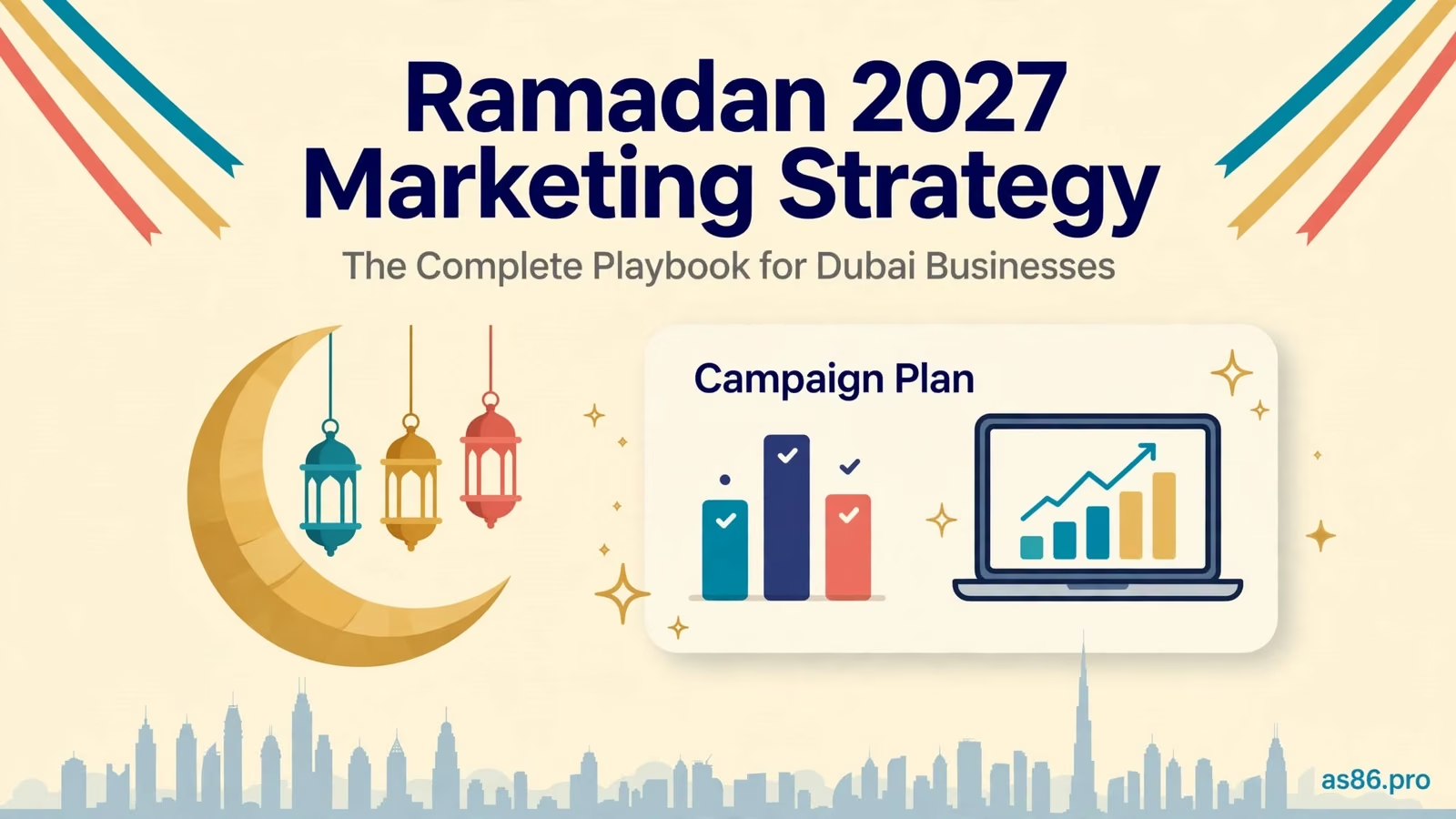
Ramadan changes how people in the UAE live for a month, and that changes how they shop, search and scroll. Days slow down, evenings come alive, families gather for iftar, and spending shifts toward food, gifts, clothing, travel and charity ahead of Eid. For businesses, it is one of the most important periods of the year, and also one of the easiest to get wrong with creative that feels tone-deaf or campaigns that run on the wrong schedule.
The difference between a good Ramadan and a wasted one is usually decided weeks before it starts. This playbook covers the expected dates for Ramadan 2027, the four phases worth planning separately, how to adjust ad timing and budgets, what respectful bilingual creative looks like, and a timeline you can start working through now.
How Should Dubai Businesses Plan Ramadan 2027 Marketing?
The short answer: plan it as four phases, not one month. Prepare before it starts, adapt your timing and tone during the first weeks, plan separately for the last ten nights, and run a distinct Eid push. Each phase has its own audience mood, its own peak hours and its own message.
Ramadan 2027 Expected Dates
Based on astronomical forecasts reported by Khaleej Times, citing the UAE's Astronomy Centre, Ramadan 2027 is expected to begin on Monday 8 February 2027, with the crescent likely to be sighted on 6 or 7 February. Eid Al Fitr is expected on Tuesday 9 or Wednesday 10 March 2027, depending on whether the month lasts 29 or 30 days. Gulf News reported the same expected dates.
These are forecasts. The official dates are confirmed by moon sighting, so build your plan with a few days of flexibility at both ends, and do not hard-code launch dates into creative. Official working hours for Ramadan are also announced separately each year, and they shift when people are at work and online, so check the announcement when it is published.
Phase 1: Preparation (Now to Early February)
Most Ramadan campaigns that perform well were planned in December and January. This phase is about getting ready, not selling:
- Decide your Ramadan offer. Iftar menus, gift sets, Ramadan bundles, Eid collections, charity tie-ins, or simply adjusted opening hours. Make it specific to the month, not a generic discount.
- Book production early. Photographers, videographers and creators get busy before Ramadan. Shoot your Ramadan and Eid creative in January.
- Prepare bilingual copy. Write the Arabic and English versions separately, and have the Arabic read by a native speaker.
- Check stock and logistics. If you sell products, confirm delivery capacity for the last weeks before Eid, when demand typically peaks.
- Update your Google Business Profile hours and website hours for Ramadan once the official working hours are announced, so customers are not turned away.
- Build audiences. Run awareness content in January so you have warm audiences to retarget once Ramadan starts.
Phase 2: The First Weeks of Ramadan
The rhythm of the day changes. Daytime is quieter and more reflective for many people, while evenings after iftar and late nights become social and active. The details vary by business and audience, so the rule is simple: do not assume, check.
Look at your own data. If you ran campaigns last Ramadan, pull the hour-of-day and day-of-week reports from Google Ads, Meta and GA4 for that period and compare them with a normal month. That tells you when your customers actually searched, clicked and converted.
Adjust ad schedules. In Google Ads, ad schedules follow your account's time zone, and you can set up to six schedule entries per day, as I explain in my post on running PPC in Abu Dhabi and Dubai. Use them to put more budget into the hours that convert during Ramadan, rather than running the same flat schedule all month.
Change the tone, not just the visuals. Content in the first weeks works best when it is about generosity, family, community and reflection, with your offer as part of that, not instead of it.
Phase 3: The Last Ten Nights and the Run-Up to Eid
The last ten nights carry special religious significance, and for many businesses they are also the busiest commercial stretch of the month as people prepare for Eid: clothing, gifts, sweets, travel and family gatherings.
- Plan a separate campaign for this period with its own creative and budget, rather than letting the month-long campaign run on.
- Put delivery deadlines in your ads and on your site: "Order by [date] for delivery before Eid". Give yourself a margin, since the exact Eid date depends on the moon sighting.
- Raise budgets where data supports it, and watch costs, because competition for attention rises as Eid approaches.
- Keep the respectful tone. Urgency is fine; aggressive countdown language that ignores the meaning of these nights is not.
Phase 4: Eid Al Fitr
Eid is a celebration, and the mood of your marketing should switch with it: brighter, warmer, focused on family, gifts, outings and travel. Prepare Eid greetings and Eid offers in advance and schedule them to go live once the date is confirmed. After Eid, follow up with customers who bought during Ramadan: a thank-you message, a review request or a reason to come back.
Respectful, Bilingual Creative
Ramadan creative is where brands most often damage goodwill. A few principles:
- Know the greetings. "Ramadan Kareem" and "Ramadan Mubarak" are both widely used; "Eid Mubarak" is for Eid, not Ramadan. Getting this wrong is noticed.
- Be thoughtful with food and drink. Food brands advertise heavily during Ramadan, especially around iftar and suhoor, but imagery of people eating or drinking during fasting hours deserves care. Many brands focus food creative on iftar and evening moments.
- Write Arabic first, not as a translation. Arabic Ramadan copy should be written for Arabic speakers, with its own tone. English copy should respect the occasion without assuming every reader is fasting.
- Avoid stereotypes and generic stock imagery of lanterns and crescents with nothing else to say. Show your real product, people and place.
- If you work with creators, check that they hold the UAE advertiser permit before the campaign, as covered in my Instagram marketing playbook.
For hook ideas in both languages, my guide to writing hooks that stop the scroll, with Arabic examples is a good starting point.
Budget Pacing Across the Month
Spending evenly across 30 days is rarely right. A sensible starting pattern is to keep a moderate budget in the first weeks while you learn how this year's audience behaves, increase it into the last ten nights and the run-up to Eid, and keep some budget for the Eid days themselves. Adjust weekly based on cost per lead or return on ad spend, not on a fixed plan made in January.
Decide your channel split by what your customers do. Search captures people actively looking for an iftar venue, an Eid outfit or a gift; social builds desire and reaches people before they search. If you are unsure where to put the money, my comparison of Google Ads and Meta Ads for UAE businesses helps frame the decision.
Measurement
Ramadan results should be compared with last Ramadan, not with January, because behaviour is so different. Before the month starts, make sure your conversion tracking works, including WhatsApp clicks and calls; my guide to tracking WhatsApp leads covers the setup. After Eid, write down what worked, which hours converted and what you would change. That note is the most valuable input to Ramadan 2028.
A Simple Ramadan 2027 Timeline
- December: decide offers, book production, review last Ramadan's data.
- January: shoot creative, write bilingual copy, run awareness content, check tracking.
- Early February: update business hours once announced, load campaigns, schedule Ramadan greetings.
- Ramadan, first weeks (from around 8 February): launch, watch hour-of-day data, adjust schedules weekly.
- Last ten nights: switch to the Eid run-up campaign, publish delivery deadlines, increase budget where it converts.
- Eid Al Fitr (around 9 or 10 March): Eid creative and greetings, then customer follow-up.
Frequently Asked Questions
Next Step
If you want help planning Ramadan 2027 campaigns, from ad schedules and budget pacing to bilingual creative, I can build the plan with you and run it across search and social. See my Google Ads and PPC management service and social media management service, or message me on WhatsApp.
Related reading:

Written by Amir Sibaee
Google Ads & Media Buying Specialist · SEO/SEM · Marketing Automation ·...
More about Amir →Related Reading
-
 RSA Search Term Categories Dubai 2026: Cut Wasted PPC Spend in UAE
-
 10 AI Prompts for Google Ads That Work in Dubai: UAE Industry Copy Guide 2026
-
 OpenAI Ads Are Now Open in the UAE: What ChatGPT Advertising Costs, Who Qualifies and How to Start
-
 How to Write Google Ads That Convert in Dubai: 2026 Copywriting Playbook
Want this done for your business? See my Search Engine Marketing services in Dubai.
Latest Posts
-
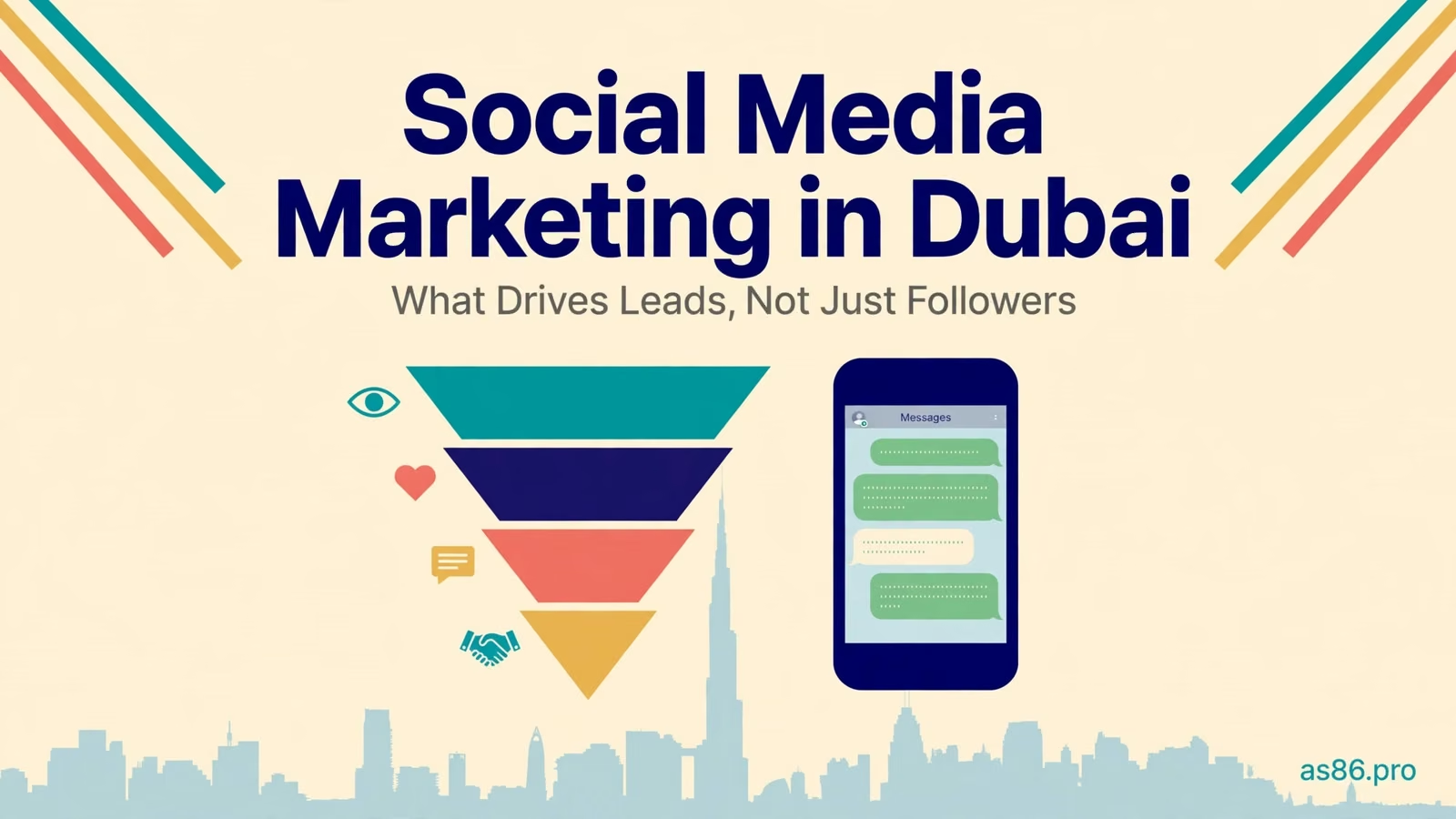 Social Media Marketing in Dubai: What Actually Drives Leads in 2027 (Not Just Followers)
-
 2026 in Review: The 7 Biggest Changes That Reshaped Dubai Digital Marketing
-
 Ecommerce SEO in Dubai: How UAE Online Stores Rank and Sell More
-
 Instagram Marketing in Dubai: The 2027 Playbook for UAE Brands
-
 PPC Agency vs Freelance Google Ads Specialist in Dubai: What UAE Businesses Actually Need
Get a Growth Plan, Not Just a Quote
Seeking expert digital marketing, web design, or graphic design in the UAE? Let's discuss your project and deliver tailored solutions for measurable growth.
Book Free Consultation