
Building a Brand in Dubai: The 2027 Guide for UAE Businesses
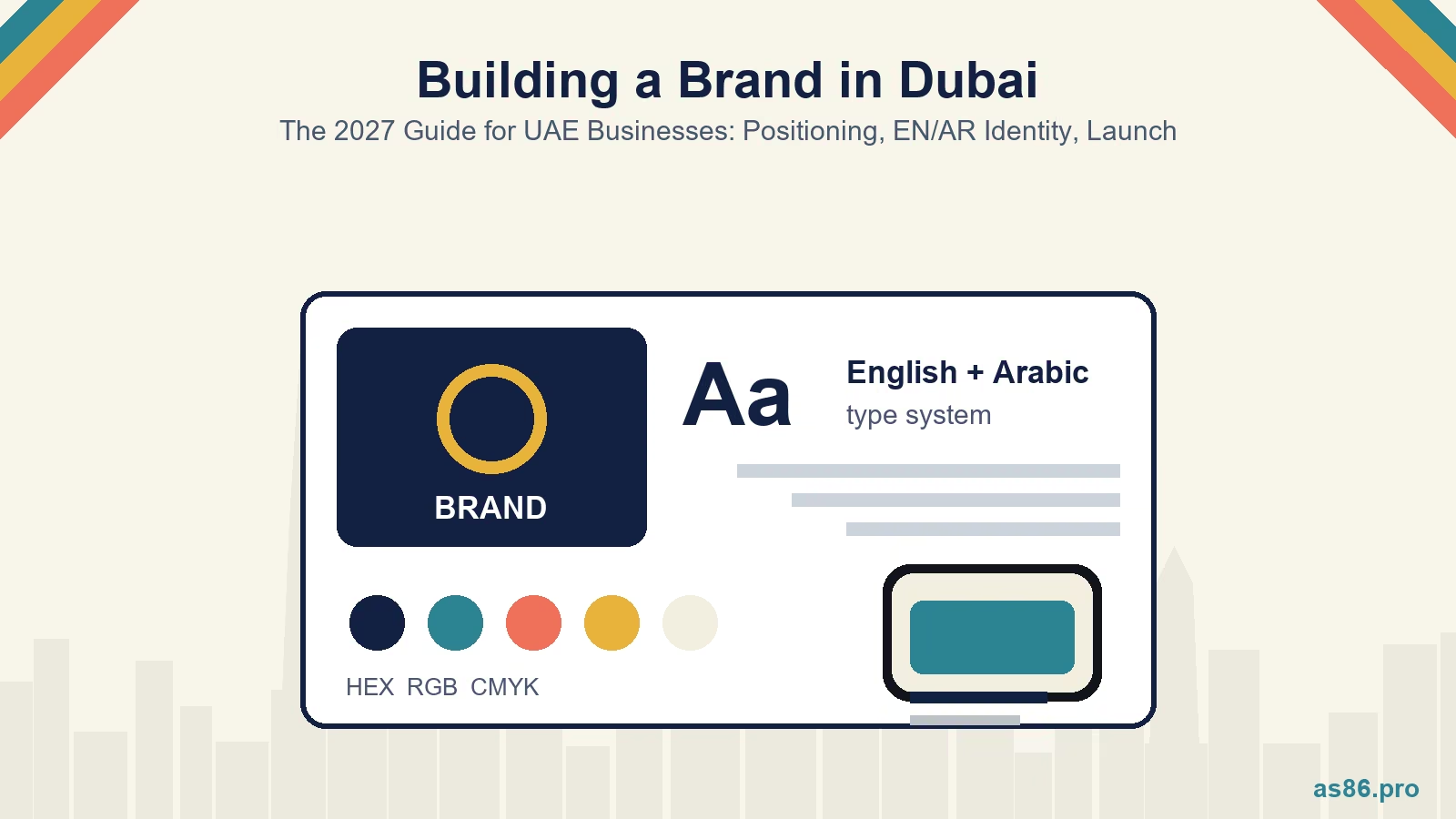
Dubai is one of the hardest places in the world to be noticed. Every street, mall and feed is full of businesses competing for the same attention, in two main languages and for an audience drawn from more than a hundred nationalities. A good product is not enough here. People need to recognise you, remember you and trust you before they ever compare prices.
That is what a brand does. Not the logo on its own, but the full system: what you stand for, how you sound, how you look in English and in Arabic, and how consistently you show up. This guide walks through how to build that system for a UAE business in 2027, step by step, with the decisions that matter most and the mistakes that cost the most to fix later.
What Does Building a Brand in Dubai Actually Involve?
The short answer: five pieces, built in order. A clear position (who you serve and why you are the better choice), a verbal identity (name, tagline and tone of voice), a visual identity (logo, colours, typography and imagery) designed for both English and Arabic, written guidelines so everyone applies it the same way, and a launch plan that puts it in front of customers consistently. Skip the first piece and the rest becomes decoration.
Step 1: Positioning Before Design
Most branding projects in Dubai start with "we need a logo". The better starting point is three questions, answered honestly and in writing:
- Who exactly is your customer? "Everyone in the UAE" is not an answer. A clinic in Jumeirah serving Western expat families, a restaurant in Deira serving South Asian workers on their day off and a B2B software company selling to procurement managers in Abu Dhabi need completely different brands, even if they all say "quality" and "service".
- What do they choose between? List the three to five alternatives a customer realistically considers, including doing nothing or doing it themselves. Your brand has to make sense next to those, not in isolation.
- Why should they pick you? One sentence, specific enough that a competitor could not say it about themselves. "Same-day appointments with female doctors in Arabic and English" is a position. "Excellence in healthcare" is not.
Write this down as a short brand brief: customer, problem, alternatives, your difference, and the proof behind it. Every later decision, from the name to the colour of a button, can be checked against that page. It also makes briefing a designer far faster and cheaper, because they are designing for a decision you have already made instead of guessing.
Step 2: Name, Tagline and Tone of Voice
If you are naming a new business, test the name in both languages before you fall in love with it. Say it out loud in English and Arabic, check how it is spelled in Arabic script, and check that it does not mean something unfortunate in either language or in Hindi, Urdu, Tagalog or Russian, which are all widely spoken here. Check that the domain, the Instagram and TikTok handles and the WhatsApp Business display name are available, and check the trade name with the licensing authority you are registering under.
Tone of voice matters as much as the name. Decide three or four words that describe how your brand speaks (for example: warm, direct, expert, never pushy), then write a few example sentences that show the difference between "on brand" and "off brand". In a bilingual market this needs to be decided for each language. An Arabic tone that works for a Gulf audience is not a translation of the English tone; it is written for its readers, with its own level of formality.
Step 3: A Visual Identity That Works in Both Scripts
This is where most people think branding begins. A complete visual identity includes:
- A primary logo and its variants: horizontal, stacked and an icon or monogram for small spaces like app icons, favicons and profile pictures.
- An Arabic lockup designed alongside the English logo, with matching visual weight and proportions, not the English name typed in a default Arabic font.
- A colour palette with exact HEX, RGB and CMYK values, a primary colour, one or two secondary colours and neutrals.
- A typography system with an English and an Arabic typeface that sit well together, for headings and body text, on screen and in print.
- Imagery rules: the style of photography, illustration or icons you use, and what you avoid.
The bilingual part is where Dubai brands most often look unprofessional. Arabic runs right to left with connected letterforms and different spacing, so a layout designed only for English usually breaks when the Arabic is added. A good identity is designed with both scripts from the first sketch. When I designed the Come Dubai logo, the Arabic lockup and the spacing rules were part of the brief from day one, so the mark holds together on a social thumbnail and on outdoor signage alike.
Colour deserves its own thinking. Colours carry meaning, and that meaning shifts between cultures and industries. My guide to the psychology of colour in branding covers how to choose a palette that fits your position rather than your personal favourite.
Step 4: Brand Guidelines People Will Actually Use
A brand that only lives in the designer's files does not survive the first busy month. Your staff, your social media manager, your printer and the agency running your ads all need the same reference. Good guidelines are short and practical:
- Logo usage: clear space, minimum sizes, which version goes where, and examples of what not to do.
- Colour and typography: the exact values and fonts, with examples of headings, body text and buttons.
- Bilingual layouts: how English and Arabic sit together on a page, a post, a sign and a business card.
- Tone of voice: the words that describe it and before-and-after examples in both languages.
- Templates: social posts, stories, presentations, email signatures and letterheads, ready to use.
Ten clear pages that people open are worth more than a hundred-page book that nobody reads. Put the files in one shared folder with the logos in vector formats (AI, EPS, SVG) and ready-to-use PNGs, and make sure you, not your designer, own the source files.
Step 5: Protect the Brand
Once the name and logo are final, look at protecting them. In the UAE, trademarks are registered with the Ministry of Economy, and each application covers specific classes of goods or services under the international Nice Classification, which has 45 classes. Registration protects the mark in the UAE for ten years and can be renewed, as summarised on the government's intellectual property page. Fees and procedures change, so check the current details with the Ministry or a trademark agent before you file.
Two practical points: protection only covers the classes you register, so think about where the business will be in three years, not only today. And if you sell in other GCC countries, a UAE registration does not protect you there on its own. This is not legal advice; for anything beyond a simple filing, speak to an IP lawyer.
Step 6: Launch and Consistency
A new brand does not exist until customers see it, and see it the same way everywhere. Before launch, update every touchpoint in one go: website, Google Business Profile, social profiles, WhatsApp Business, signage, uniforms, packaging, invoices and email signatures. A half-updated brand, with the new logo on Instagram and the old one on Google Maps, looks like two different businesses.
After launch, consistency is what builds recognition. The same colours, the same tone and the same kind of imagery, week after week, on social media and in ads. That is where a social media kit and post templates pay for themselves. If you want the content side to produce leads and not only likes, my guide to social media marketing in Dubai covers how to connect brand content to enquiries.
What Does Branding Cost in Dubai?
Prices vary widely, from marketplace logo offers to agency projects in six figures. The useful question is what is included. For reference, my own pricing is fixed and agreed upfront:
- Brand identity from AED 2,500: logo with an Arabic lockup, colour system, typography system and basic usage guidelines.
- Full brand system from AED 5,500: the identity plus collateral templates and a social media kit.
A complete identity typically takes three to four weeks from the discovery session to final files. Whatever you pay, check that you receive the vector source files, the Arabic lockup, written guidelines and full ownership of the work. For a detailed look at what a logo alone should cost and include, read my companion guide to logo design in Dubai.
Mistakes That Cost Dubai Brands the Most
- Designing before positioning. A beautiful logo for an unclear business is still an unclear business.
- Treating Arabic as a translation. Machine-translated Arabic or an Arabic name dropped into a default font tells Arabic-speaking customers the brand was not made for them.
- Copying a competitor. In a crowded market, looking like the leader makes you look like the cheaper version of the leader.
- Changing everything every year. Recognition takes time. Refresh the execution when needed, but keep the core.
- No owner. Someone in the business has to be responsible for checking that every post, ad and print job follows the guidelines.
I cover these and more, with how to recover from each, in seven Dubai branding mistakes that hold businesses back.
A Simple Brand-Building Timeline
- Week 1: write the brand brief: customer, alternatives, difference, proof.
- Week 2: name checks in both languages, tone of voice, domain and handle checks.
- Weeks 2 to 5: visual identity, from concepts to the final logo, Arabic lockup, colours and type.
- Week 5: guidelines and templates; trademark filing prepared.
- Week 6: update every touchpoint in one go and launch.
- Months 2 to 6: apply it consistently, review what customers respond to, and adjust the execution, not the core.
Frequently Asked Questions
Next Step
If you are building a new brand or rebuilding one that no longer fits, I can take it from the brief to the final files, with a properly designed Arabic lockup and guidelines your team will use. See my graphic design and branding service and social media management service, or message me on WhatsApp.
Related reading:

Written by Amir Sibaee
Google Ads & Media Buying Specialist · SEO/SEM · Marketing Automation ·...
More about Amir →Related Reading

Want this done for your business? See my Graphic Design services in Dubai.
Latest Posts
-
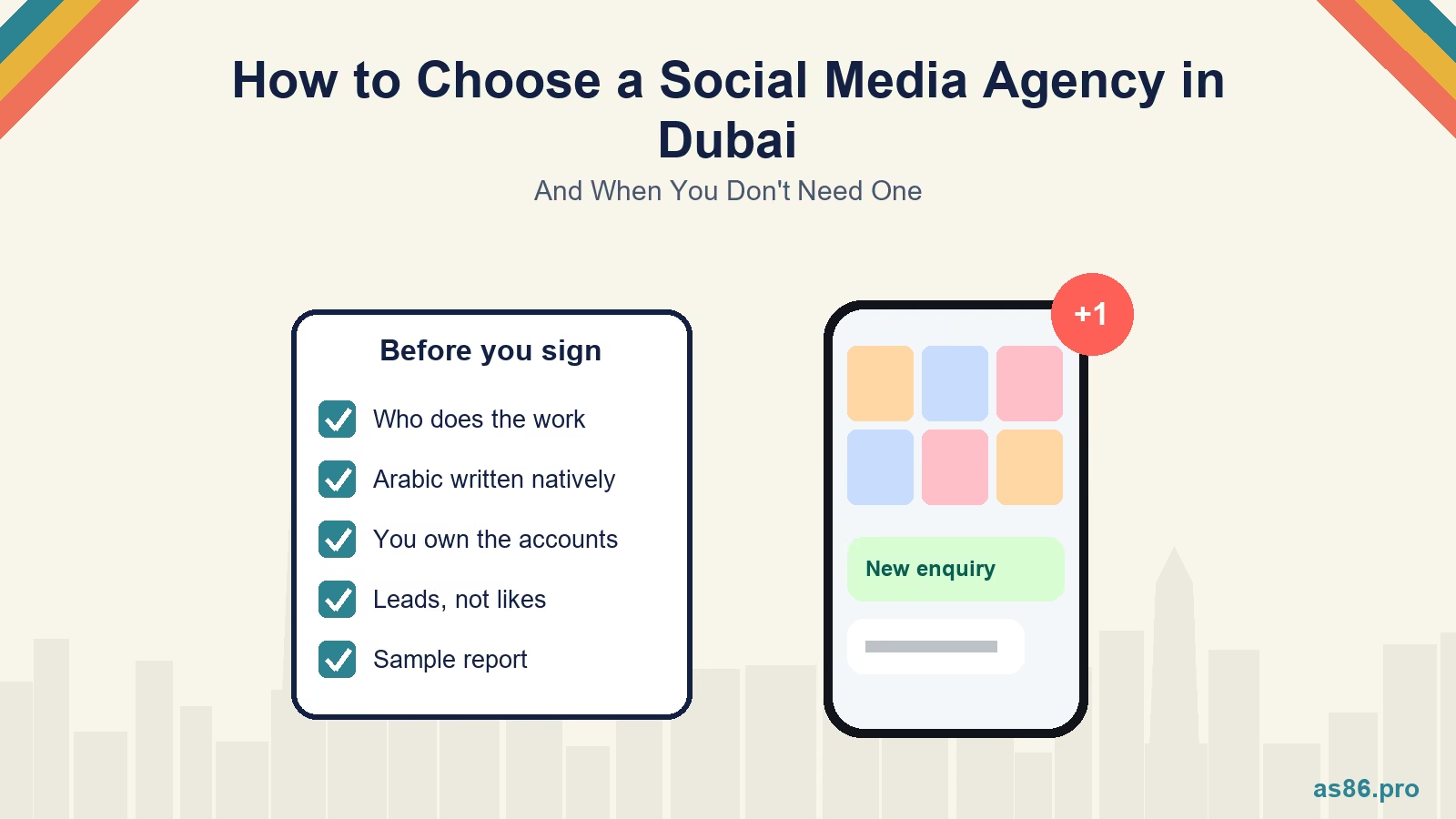 How to Choose a Social Media Agency in Dubai (And When You Don't Need One)
-
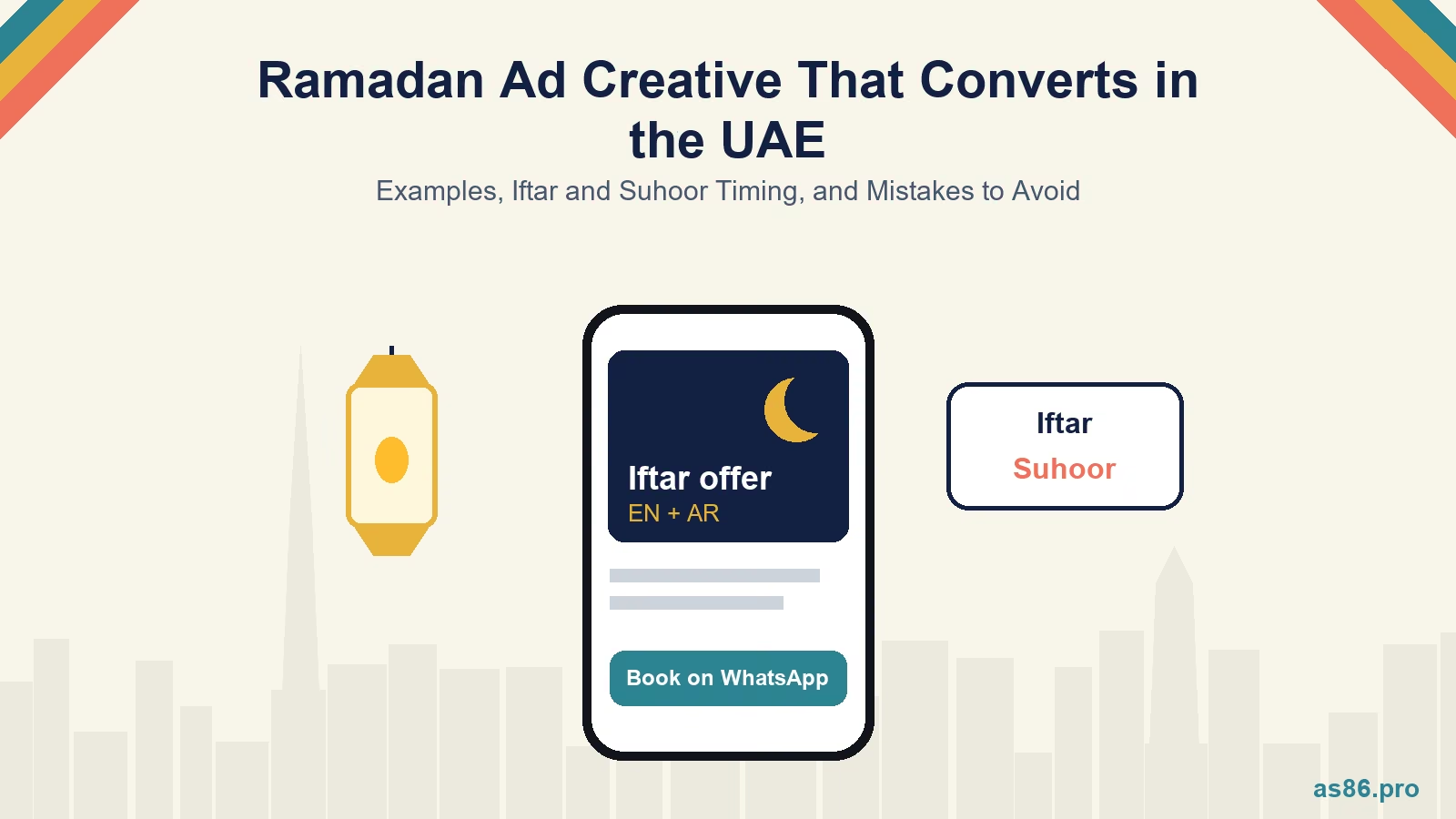 Ramadan Ad Creative That Converts in the UAE: Examples, Timing and Mistakes to Avoid
-
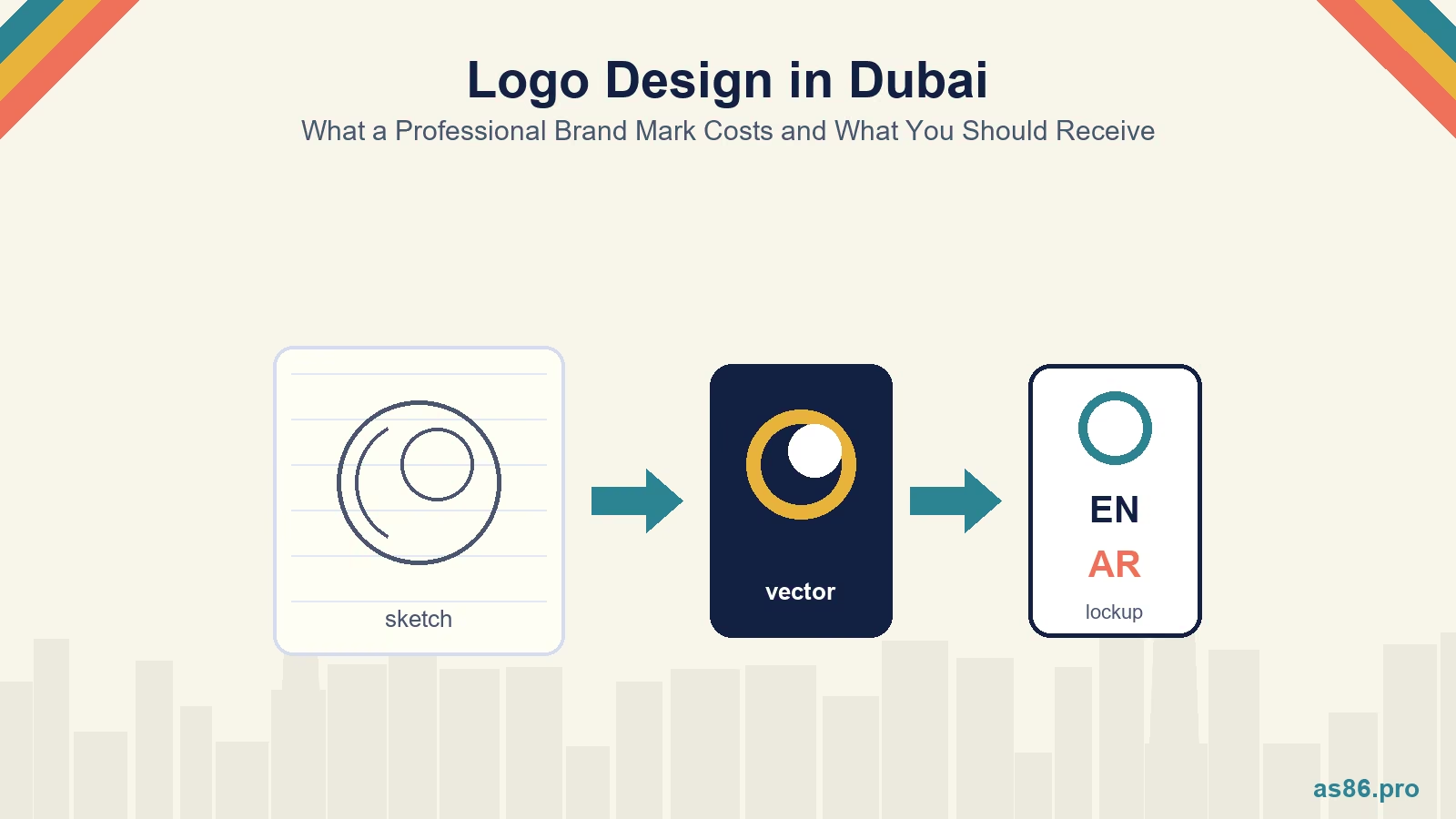 Logo Design in Dubai: What a Professional Brand Mark Costs and Why It Matters
-
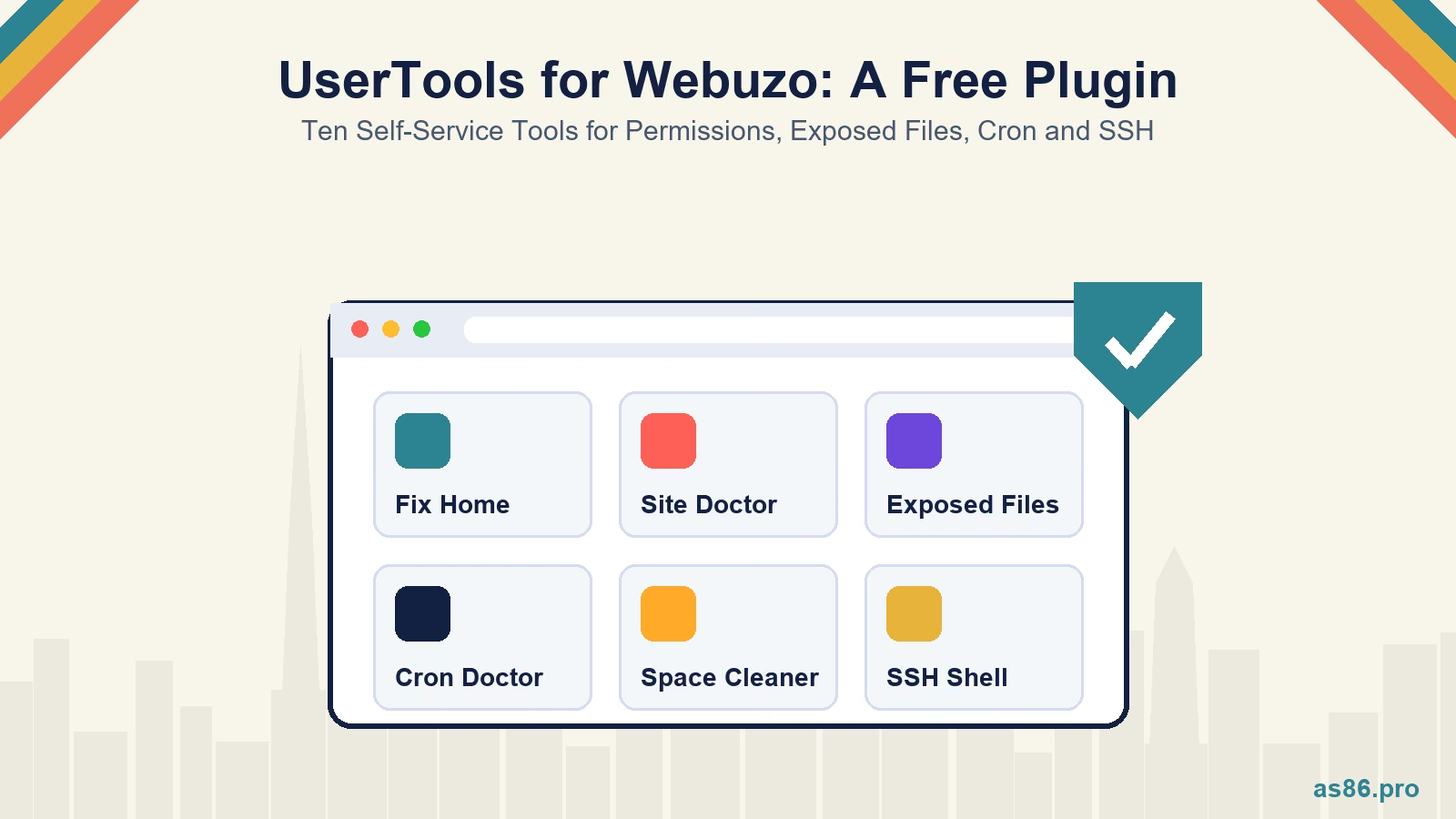 UserTools for Webuzo: A Free Plugin That Lets Users Fix Permissions, Exposed Files and SSH Access Without Root
-
 Ramadan 2027 Marketing Strategy for Dubai Businesses: The Complete Playbook
Get a Growth Plan, Not Just a Quote
Seeking expert digital marketing, web design, or graphic design in the UAE? Let's discuss your project and deliver tailored solutions for measurable growth.
Book Free Consultation