
The Psychology of Color in Branding: Choosing the Right Palette
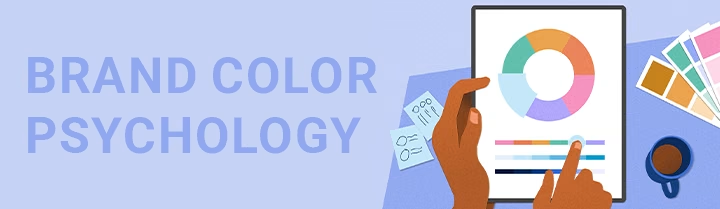
Ever wondered why banks love blue, fast-food chains scream red, and luxury brands drown in black? Spoiler: it’s not random. It’s the psychology of color in branding—the science (and art) of making your customers feel something before they’ve read a single word.
As a Dubai-based graphic designer and digital marketer, I’ve seen firsthand how the right palette can transform a brand from “meh” to memorable. Colors aren’t just decoration—they’re persuasion in disguise.
Understanding the Emotional Impact of Color 🎨
Here’s your cheat sheet for picking colors that work harder than your sales team:
-
Blue → Trust, stability, professionalism
Perfect for finance, healthcare, or tech firms who want clients to sleep well knowing their money/data/health is safe. -
Red → Passion, urgency, action
Best used for CTAs, sales, or brands that thrive on energy. (Yes, that “SALE” sign in red isn’t by accident.) -
Green → Growth, health, sustainability
Ideal for eco-brands, wellness companies, or anyone who wants to whisper “prosperity” in hex code. -
Yellow → Happiness, optimism, warmth
Use sparingly. It can brighten your brand or blind your audience if overused. Great for hospitality and family-friendly businesses. -
Black → Elegance, exclusivity, luxury
Chanel, Rolex, and every Dubai luxury real estate brochure ever—it’s timeless, sleek, and screams premium. -
White → Simplicity, clarity, purity
A minimalist’s dream. Think Apple. It communicates “we’re so good, we don’t need to shout.”
Color Means Different Things to Different Cultures — Especially in Dubai
Color psychology research is mostly built on Western audiences, and Dubai’s customer base rarely is. A palette that reads correctly to one nationality can send a completely different signal to another:
-
White: purity and simplicity in Western branding; associated with mourning in parts of East Asia.
-
Red: urgency and danger in Western contexts; luck, prosperity, and celebration in Chinese culture — a strong choice for campaigns targeting Dubai’s Chinese business and tourist segment.
-
Green: growth and sustainability generally, but also carries specific cultural and religious significance across the Arab world — worth using thoughtfully rather than purely decoratively in GCC-facing brands.
For a market as multicultural as the UAE, test your palette’s perception across your actual customer segments before locking it in — not just against the Western default the color-theory literature assumes.
Building a Cohesive Color Palette
A strong brand palette isn’t a rainbow; it’s strategy.
-
Primary Color: Your hero—dominates your logo & main branding.
-
Secondary Color: Complements and balances your primary.
-
Accent Color: The highlighter pen of your palette—CTA buttons, key highlights, attention grabbers.
📌 Pro Tip: A Dubai café I worked with swapped a dull gray CTA button for a bold coral accent. Conversion rates jumped 18% in one month—all thanks to a color change.
How to Choose Your Brand Palette: A Practical 5-Step Process 🧭
Knowing what colors mean is only half the job. Here’s the process I actually walk clients through when we’re building a palette from scratch, not just picking a favourite hex code:
-
Start with your positioning, not your favourite color. Are you the premium option, the fast/affordable option, or the trustworthy expert? That answer should narrow your palette before you open a color wheel — a luxury real estate brand and a budget delivery app shouldn’t be drawing from the same emotional register.
-
Audit your competitors’ colors first. Screenshot the top five to eight competitors in your category and lay their brand colors side by side. In most industries you’ll see clustering — and standing out inside that cluster (a fintech that isn’t blue, a wellness brand that isn’t green) is often more memorable than blending in, provided it doesn’t fight the emotional meaning you actually need to send.
-
Pick one dominant color and commit. Indecisive brands hedge with three “equal” colors and end up with none of them registering. One primary color should carry roughly 60–70% of your visual weight across the site, packaging, and social presence.
-
Build the 60-30-10 ratio. A rule borrowed from interior design that works just as well for brand systems: roughly 60% primary/background color, 30% secondary, 10% accent (your CTA color). It keeps a palette feeling intentional instead of busy.
-
Pressure-test it on the smallest and largest surface you own. A palette that looks great on a full-bleed homepage hero can fall apart on a 32px app icon or a WhatsApp profile photo. Check it at both extremes before finalising anything.
Common Color Palette Mistakes I See Dubai Brands Make ⚠️
A few patterns come up often enough in audits that they’re worth calling out directly:
-
Copying a global brand’s palette without their brand equity. Blue reads as “trustworthy” partly because decades of well-known blue brands trained audiences to read it that way. A three-month-old startup borrows the color, not the trust — the color alone won’t do that work for you.
-
Redesigning the palette every time leadership changes. Color recognition compounds over years, not months. Every unnecessary palette refresh resets that recognition to zero and forces the market to re-learn your brand from scratch.
-
Running different accent colors on the Arabic and English versions of the same site. It happens more often than you’d expect when the Arabic site is built as an afterthought — a customer switching between them shouldn’t feel like they’ve landed on a different company.
-
Choosing colors in Figma without checking them on an actual phone outdoors. Dubai’s sunlight washes out low-contrast palettes that look perfectly fine on a studio monitor indoors. Always spot-check on a physical device outside before locking a palette in.
Don’t Skip Accessibility 👓
A beautiful palette that fails contrast standards actively loses you customers — light gray text on a white background might look elegant, but it’s unreadable for a meaningful share of visitors, including anyone with low vision or using a phone screen in Dubai’s midday sun glare.
-
Body text should meet a 4.5:1 contrast ratio against its background (WCAG AA) — free tools like WebAIM’s Contrast Checker verify this in seconds.
-
Never rely on color alone to convey meaning (e.g., red = error) — pair it with an icon or label for colorblind users, roughly 1 in 12 men.
-
Test your accent color’s CTA buttons specifically — they’re the highest-stakes contrast failure, since an unreadable button is a lost conversion, not just an aesthetic miss.
Case Study: ComeDubai 🌍✈️
Tourism platform ComeDubai nailed its palette:
-
Deep red: Urgency, excitement, adventure. Perfect for “Book Now” buttons.
-
Light pink: Warmth, approachability, and friendliness.
Together, they balance the thrill of travel with a sense of trust and hospitality—creating a palette that’s both scroll-stopping and conversion-friendly.
The Final Stroke 🎨
Your brand’s colors are its emotional handshake. They’re the first impression, the silent sales pitch, the vibe that sticks. Get it right, and you’ll build trust, spark emotion, and drive action—before a single ad copy or sales pitch kicks in.
If you’re ready to stop guessing hex codes and start designing a palette that actually converts, I’m here to help you build a brand identity that paints the right story.
FAQs About Color Psychology in Branding

Written by Amir Sibaee
Google Ads & Media Buying Specialist · SEO/SEM · Marketing Automation ·...
More about Amir →Related Reading


Want this done for your business? See my Graphic Design services in Dubai.
Latest Posts
-
 ChatGPT Custom GPTs: Personal Accounts Can't Build New Ones. What to Do With the GPTs You Already Rely On
-
 WhatsApp Service Messages Become Chargeable on 1 October 2026: What UAE Businesses Need to Do Now
-
 Canva AI Explained: A Practical Guide for Dubai Small Business Owners Who Aren't Designers
-
 TikTok Shop vs Instagram Shopping in the UAE: Which Should Your Brand Sell On First?
-
 How to Set Up TikTok Shop in the UAE: A Step-by-Step 2026 Seller Guide
Tags
Get a Growth Plan, Not Just a Quote
Seeking expert digital marketing, web design, or graphic design in the UAE? Let's discuss your project and deliver tailored solutions for measurable growth.
Book Free Consultation