
Google Tag Manager 101: Tracking Your Website’s Most Important Events

In digital marketing, the golden rule is simple: “You can’t manage what you don’t measure.”
But what if you want to track a key event—like a form submission, phone click, or quote request—and you don’t know how to code? This is where Google Tag Manager (GTM) comes in. GTM is a free tool that lets you install and manage tracking tags on your website—without touching the backend code. For UAE & GCC businesses, this means faster setups, better tracking, and smarter ad spend.
Step-by-Step: Implementing Click Element GTM Tracking
Let’s break down how to use GTM to track your website’s most important events.
Step 1: Install GTM on Your Website
-
Create a free GTM account at tagmanager.google.com.
-
Copy the container code snippet provided.
-
Add this code to every page of your website.
💡 Pro Tip: If you’re using WordPress, plugins like Insert Headers and Footers or DuracellTomi’s GTM plugin make installation a few clicks away.
Step 2: Understand Tags & Triggers
Think of GTM like a control room:
-
Tags = The action (e.g., sending event data to Google Analytics, Meta Ads, or TikTok Ads).
-
Triggers = The rule that tells the tag when to fire (e.g., button click, form submit, page view).
Together, tags + triggers = event tracking without coding.
Step 3: Create Your First Tag & Trigger
Example: You want to track when users click the “Request a Quote” button.
-
Create a Trigger
-
Go to Triggers > New.
-
Choose Click – Just Links.
-
Specify the button element you want to track.
-
-
Create a Tag
-
Go to Tags > New.
-
Select GA4 Event.
-
Name it something clear like
quote_button_click. -
Connect it to the trigger you just created.
-
Step 4: Preview & Publish
-
Click Preview in GTM.
-
Visit your website and click the button you’re tracking.
-
In the debug window, confirm your tag fired.
-
If it works → hit Submit to publish changes live.
💡 Pro Tip: Always preview first—publishing without testing can break your setup.
Why GTM Is a Game-Changer
-
No coding needed → faster execution.
-
Works with Google Analytics, Meta Ads, TikTok, LinkedIn, Hotjar, and more.
-
Helps measure ROI by connecting actions (clicks, forms, calls) to conversions.
-
Saves developers’ time while giving marketers full control.
FAQs
tel:). This is a must-track conversion for local businesses in UAE.Conclusion
Google Tag Manager empowers you to track and measure key website events without relying on a developer. By setting up GTM correctly, you’ll gain insights into which campaigns drive real conversions—and where to optimize your ad spend.
👉 If you want hands-on help setting up GTM for your UAE/GCC business, I can help you connect GTM, GA4, and ad platforms for a full-funnel conversion tracking system.
Setting Up a Google Tag Manager Container for a Dubai Business: A Practical Walkthrough
Once you understand the basics of what Google Tag Manager does, the next step is setting up a container that actually matches how a UAE business site works in practice — bilingual pages, a WhatsApp click-to-chat button instead of (or alongside) a contact form, and three separate ad and analytics platforms that all need to fire from the same set of user actions. Here is a practical, UAE-specific walkthrough for structuring that container properly from day one.
Step 1: Create the Container and Install the Base Code
Create a new GTM container scoped to your domain, then install the container snippet in your site's header and body, exactly as GTM provides it. On WordPress, this is usually done through a header/footer plugin or directly in the theme's template files rather than a page builder shortcode, so the snippet loads on every page, including the Arabic-language templates if your site runs a bilingual URL structure such as /ar/ subfolders.
Step 2: Add the GA4 Configuration Tag
Add a Google Analytics: GA4 Configuration tag, triggered on All Pages, using your GA4 Measurement ID. This becomes the base tag that most of your event tags will reference, so get it firing correctly and verified in GA4's Realtime report before layering anything else on top of it.
Step 3: Track the WhatsApp Click-to-Chat Button
Most Dubai business sites route their primary conversion action through a WhatsApp click-to-chat button rather than, or in addition to, a contact form, since it matches how UAE customers actually prefer to reach a business. In GTM, create a Click trigger that fires when the Click URL contains “wa.me” or your specific WhatsApp link pattern, then attach a GA4 Event tag to that trigger, along with a matching Google Ads conversion tag and a Meta Pixel Lead or Contact event, so a single click populates all three platforms at once.
How to Track WhatsApp Leads in Google Ads: GTM & Zapier Setup for Dubai (2026)
Step 4: Use a Bilingual EN/AR Event Naming Convention
If your site serves both English and Arabic visitors, name events so the language is visible in your reporting rather than blended together. A simple, reliable pattern is to append the page language as a suffix, generated from a GTM variable reading the page's lang attribute or URL path, for example whatsapp_click_en and whatsapp_click_ar, or cta_click_en and cta_click_ar for other lead actions. This lets you compare conversion behavior between your English and Arabic audiences directly in GA4 instead of guessing from blended totals, which matters given how differently the two segments often browse and convert.
Step 5: Add Meta Pixel and Google Ads Conversion Tags
Add a Meta Pixel base code tag firing on All Pages for PageView, then add specific event tags, such as Lead or Contact, firing on the same triggers you built for GA4 in Step 3. Add your Google Ads conversion tracking tag with the correct conversion ID and label, firing on the same WhatsApp click trigger and on form submissions, so every meaningful action is recorded consistently across GA4, Meta, and Google Ads rather than only in one platform.
Step 6: Preview, Test, and Publish
Before publishing, use GTM's Preview mode to click through the WhatsApp button and any forms on both the English and Arabic versions of the site, confirming each tag fires with the correct bilingual event name and that no tag fires twice. Only publish once every trigger has been verified in Preview mode, since an unpublished container makes zero difference to your live reporting no matter how correctly it is configured.
A properly structured container is only useful if the site behind it is fast and reliably online to begin with — slow or inconsistent hosting can distort your conversion data as much as a tracking error can. If you have not audited your hosting setup recently, our guide on what managed WordPress hosting actually means in Dubai is a good next read, and if your tracking is solid but visibility is the bottleneck, our Local SEO checklist for Dubai SMEs walks through the Google Business Profile side of the equation at our Local SEO checklist for Dubai SMEs.

Written by Amir Sibaee
Google Ads & Media Buying Specialist · SEO/SEM · Marketing Automation ·...
More about Amir →Related Reading
-
 AI-Assisted Google Ads Campaign Building for UAE Businesses (2026)
-
 Unlock the Power of AI: 50 ChatGPT Prompts to Supercharge Your Dubai Digital Marketing
-
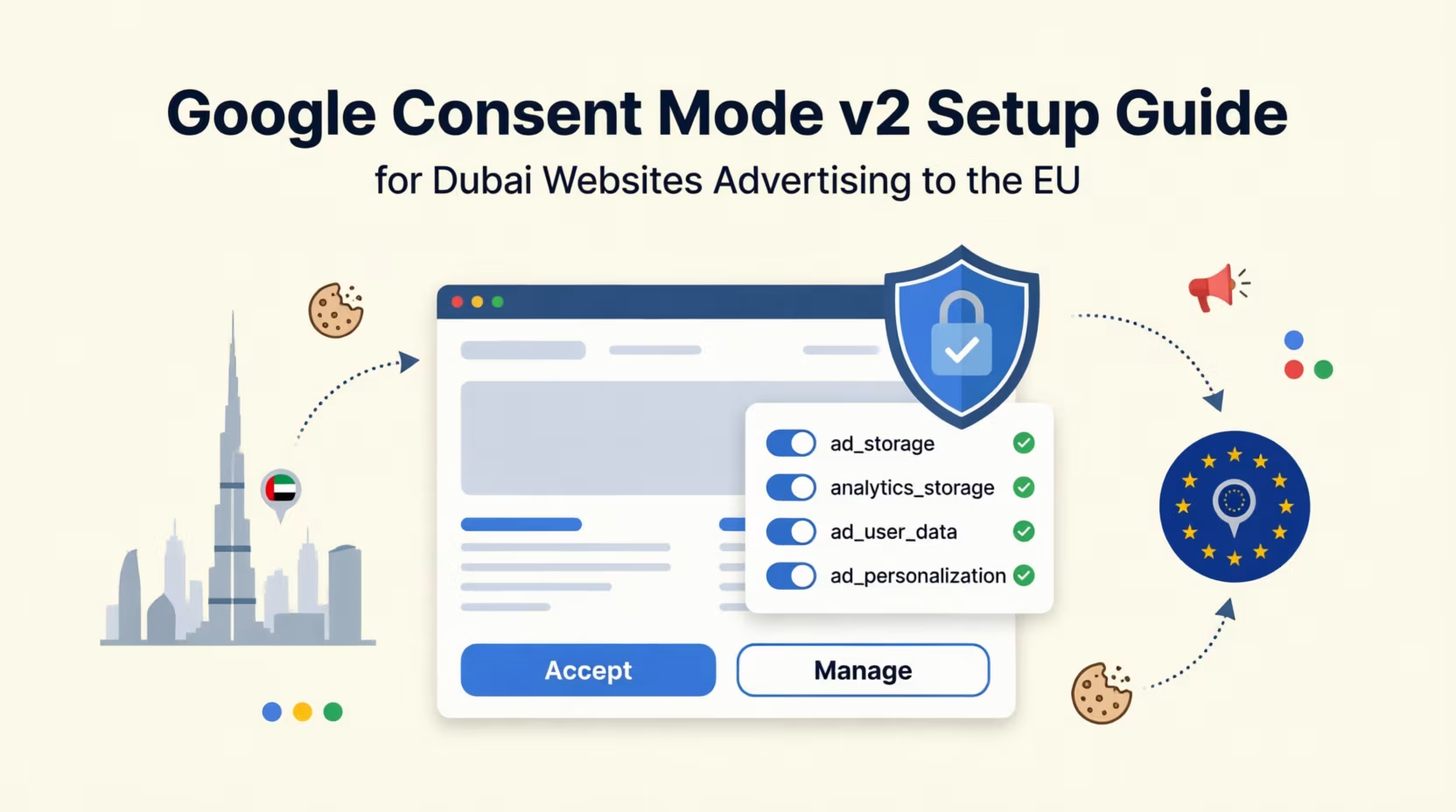 Google Consent Mode v2 Setup Guide for Dubai Websites Advertising to the EU
-
 UAE PDPL Compliance for Marketers: What Your Tracking Pixels Actually Need in 2026
Want help putting this into practice? See all my digital marketing services in Dubai.
Latest Posts
-
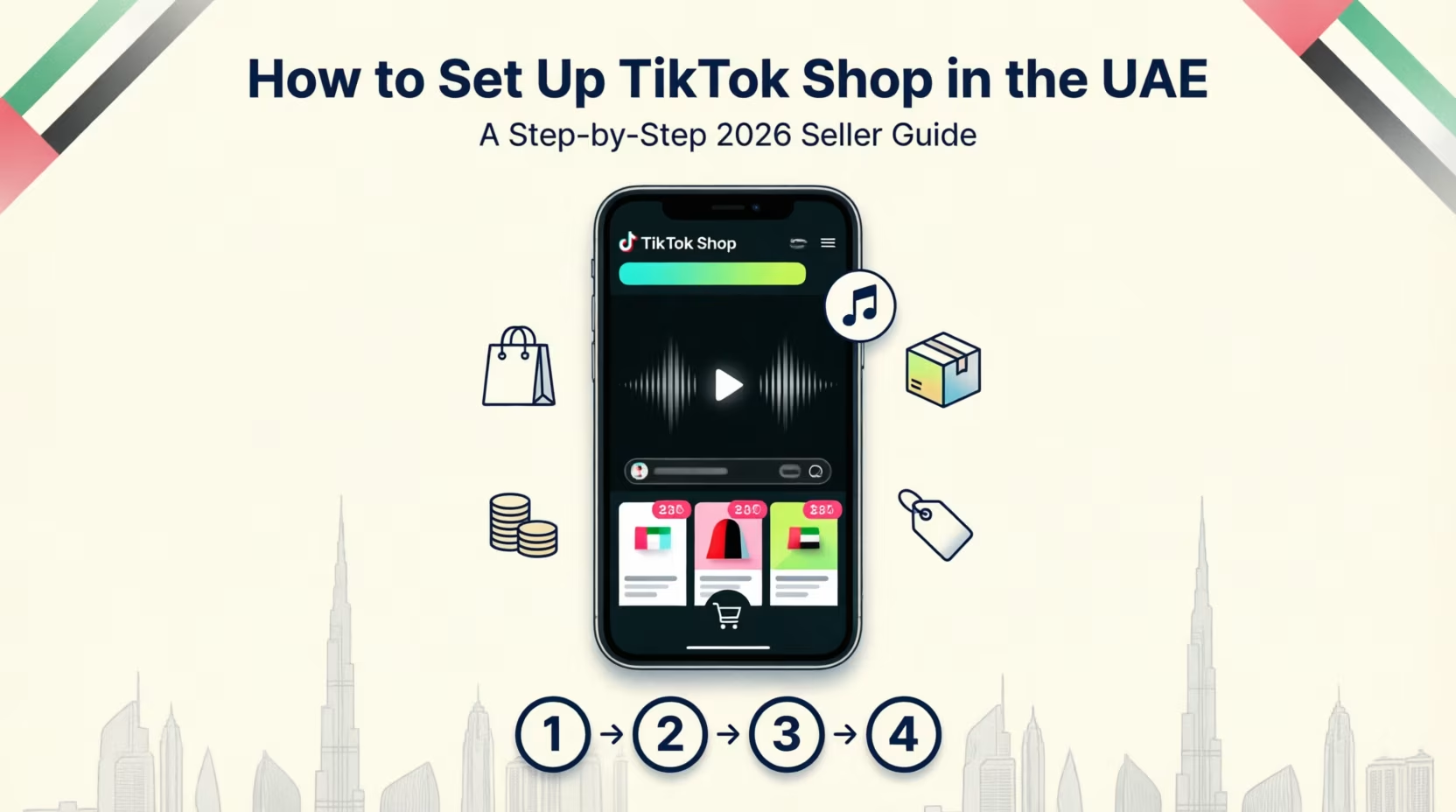 How to Set Up TikTok Shop in the UAE: A Step-by-Step 2026 Seller Guide
-
Google Consent Mode v2 Setup Guide for Dubai Websites Advertising to the EU
-
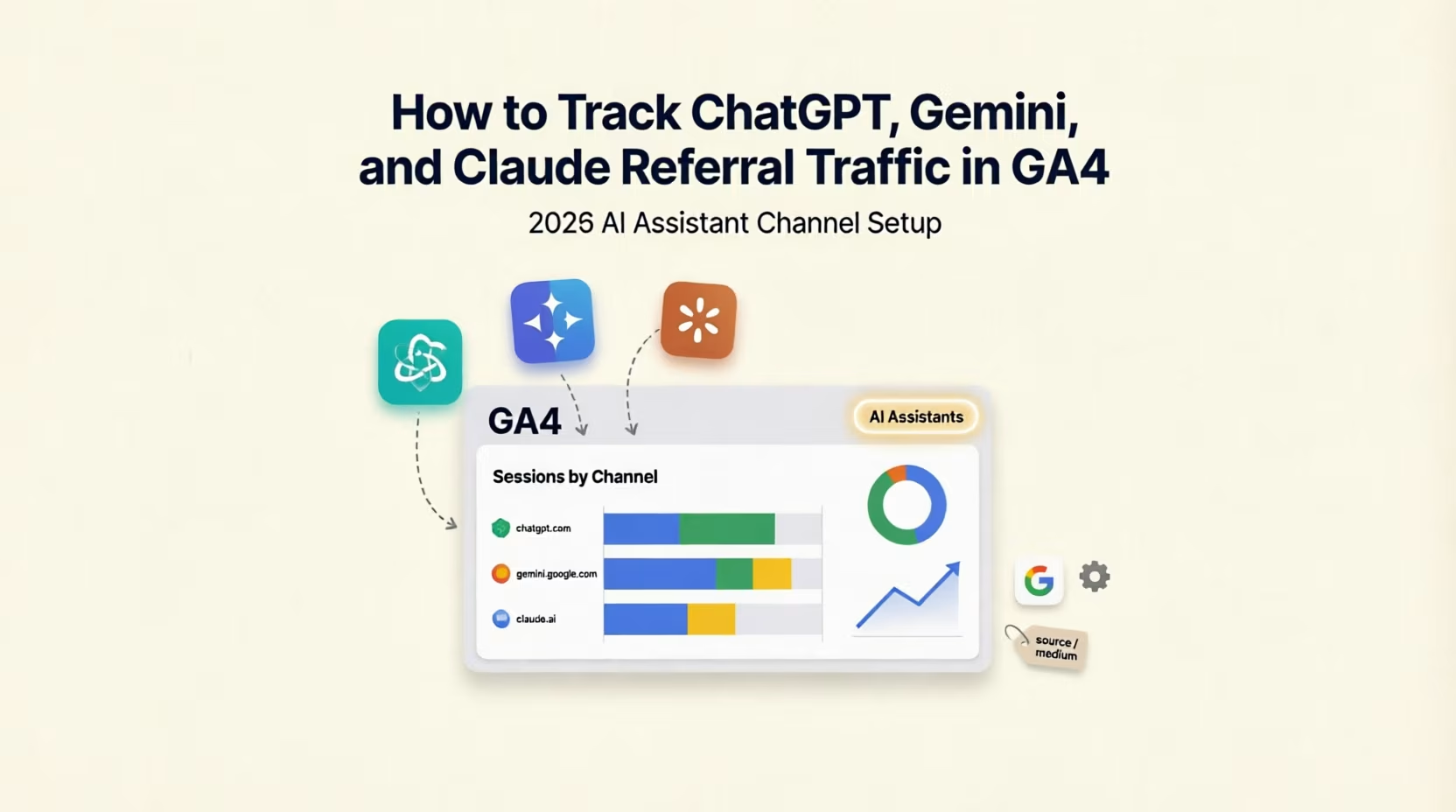 How to Track ChatGPT, Gemini, and Claude Referral Traffic in GA4 (2026 AI Assistant Channel Setup)
-
 Two Critical WordPress Vulnerabilities Patched in August 2026 — Update Your Dubai Site Now
-
UAE PDPL Compliance for Marketers: What Your Tracking Pixels Actually Need in 2026
-
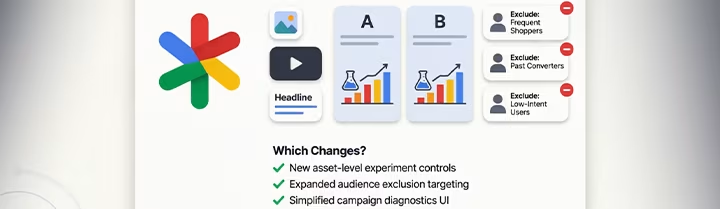 Performance Max in 2026: Asset Experiments, New Audience Exclusions, and What Actually Changed
-
 Should You Let an AI Agent Run Your Ad Campaigns? A Dubai Marketer's Honest Take
-
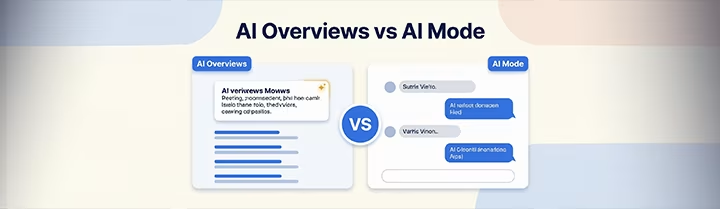 AI Overviews vs AI Mode: What Changed in Google Search in 2026 (And What Dubai Businesses Should Do About It)
-
 Google Ads Is Removing Language Targeting From Search in September 2026 & What It Means for Your EN/AR Campaigns
-
 Google Says GEO Isn't a Separate Strategy From SEO— What That Actually Means for Dubai Businesses
Get a Growth Plan, Not Just a Quote
Seeking expert digital marketing, web design, or graphic design in the UAE? Let's discuss your project and deliver tailored solutions for measurable growth.
Book Free Consultation