
AI-Assisted Google Ads Campaign Building for UAE Businesses (2026)

Building Google Ads campaign structures manually takes hours. AI tools can compress that to minutes — but only if you understand the structural logic first. Here's how Dubai advertisers are using AI to build better SKAG and STAG campaigns faster, with a real clinic case study from the UAE.
Best AI Tools To Build Better Google Ads Campaign Structures for UAE Businesses (2026)
There's a bottleneck that every Dubai PPC manager hits eventually. You've got a new client — a clinic in Jumeirah, a cleaning company in Marina, a real estate developer launching an off-plan project in JVC — and before a single dirham of ad spend goes live, you need to build a campaign structure that can actually compete in one of the world's most expensive pay-per-click markets.
Traditionally, that means hours of work: keyword research, match type decisions, ad group architecture, RSA copy for each group, sitelink extensions, negative keyword lists, and conversion tracking verification. Done properly for a bilingual EN/AR campaign, a thorough manual build takes a full working day at minimum.
AI tools have changed this equation materially. Not by replacing the strategic thinking — that still requires a human who understands the UAE market — but by compressing the mechanical execution time from hours to minutes. This guide covers how the AI-assisted workflow actually operates, what it does well, where it still needs human oversight, and how a Dubai clinic used this approach to cut campaign build time by 80% without sacrificing structural quality.
The Problem With Manual Campaign Builds in Dubai
Before exploring the AI solution, it's worth being precise about what makes manual Google Ads builds slow and error-prone in the UAE context specifically. There are three compounding factors.
Bilingual duplication. Every campaign element that exists in English needs a parallel Arabic version — keywords, RSA copy, sitelinks, callouts, negative keywords. A campaign that would take three hours to build in English effectively takes six hours when built properly for both languages. Most Dubai advertisers either skip the Arabic build entirely (missing a significant segment of high-intent UAE searchers) or rush it (producing translated-rather-than-native Arabic copy that underperforms).
Match type complexity. The SKAG vs STAG decision — covered in depth in the structural guide — requires analysing keyword search volume, conversion probability, and smart bidding data maturity for each ad group before deciding which architecture to apply. In a campaign with 30–40 target keywords, this decision matrix is manageable manually. In a campaign with 150+ keywords across multiple service lines, it becomes a significant time investment before any copy is written.
Negative keyword pre-population. A blank negative keyword list on day one means the first week of spend inevitably includes irrelevant traffic — job seekers, students, researchers, and users searching in other GCC countries. Pre-populating a strong negative list from campaign launch requires either institutional knowledge built over years in the UAE market or significant research time per campaign.
AI tools address all three of these bottlenecks directly — with important caveats about where human review is still non-negotiable.
What AI-Assisted Campaign Building Actually Does
The core workflow uses a structured AI prompt — fed into ChatGPT, Claude, or a custom GPT built specifically for this purpose — to generate the mechanical components of a campaign structure based on your inputs. You provide the strategy; the AI produces the execution materials.
A well-structured prompt for UAE campaign building includes five inputs: your service or product, your target keywords, your USPs, your target location (down to district level for Dubai), and your conversion action (form, call, or WhatsApp). From these five inputs, the AI generates the full campaign skeleton.
What it generates well:
RSA headlines and descriptions across all required ad groups, structured with keyword pinning in Position 1 and USP filters in Position 2 — the architecture covered in the copywriting guide. Match type suggestions per keyword based on the search volume and intent signals you've provided. Ad group clustering recommendations — grouping keywords by shared intent to align with the STAG approach while flagging which terms warrant individual SKAG treatment based on commercial value. Negative keyword lists pre-populated with job-seeker terms, DIY-intent modifiers, competitor brand names, and geographic exclusions relevant to the UAE market. Sitelink and callout suggestions aligned to your stated USPs. Import-ready CSV structure formatted for direct upload into Google Ads Editor — eliminating the manual data entry step entirely.
What it doesn't do well without human oversight:
Bid strategy recommendations require account-level conversion data that the AI doesn't have access to. Match type decisions for Arabic keywords require knowledge of Gulf dialect expansion patterns that generic AI models handle inconsistently. Quality Score history and account performance context are invisible to the AI — it's always building from a blank slate. Cultural nuance in Arabic copy still requires native review before any campaign goes live.
The practical implication: AI handles the architecture and the mechanical execution. A human with UAE market knowledge handles the strategic inputs, reviews the Arabic copy, sets bid strategies based on actual account data, and makes the judgment calls that require context the AI doesn't have.
The SKAG/STAG Decision Within an AI-Assisted Build
The structural decision that matters most in an AI-assisted Dubai campaign build is the same one that matters in a manual build: which keywords get SKAG treatment and which get grouped into STAGs.
The AI workflow makes this decision more systematic rather than more intuitive. When you feed a keyword list into a well-structured prompt, you can ask it to classify each keyword by commercial intent level (high, medium, low), estimated search volume tier (based on your own research inputs), and match type recommendation. The output is a tiered keyword list that maps directly onto the three-tier hybrid structure:
Tier 1 SKAGs — highest commercial intent, highest individual value, warrant dedicated ad groups and manual bid oversight. For a Dubai private clinic, this means terms like تقويم أسنان دبي (dental braces Dubai) or laser hair removal DIFC — high-intent, high-CPC terms where precision copy and precise bidding justify the management overhead.
Tier 2 STAGs — thematically related intent clusters that share an RSA and smart bidding. For the same clinic, this means grouping dental cleaning dubai, teeth whitening dubai, and scale and polish dubai marina into one ad group — same searcher need, same funnel stage, one strong RSA serves all three.
Tier 3 Discovery — one broad match group per service line, tightly controlled with the negatives generated in Step 1, used to capture query patterns the initial keyword research missed.
The AI produces this tiered structure in minutes based on your keyword inputs. The human review step confirms that the tier assignments are commercially sensible for your specific category and client profile — because the AI doesn't know that dental braces has a three-month consideration cycle in Dubai while emergency extraction is a same-day purchase decision.
Case Study: Dubai Private Clinic, Multi-Service Google Ads Build
The situation: A private medical clinic with locations in Jumeirah and Business Bay needed to launch Google Ads across four service lines simultaneously: dental, dermatology, physiotherapy, and general practice. Each service line required EN and AR campaigns with distinct keywords, copy, and landing pages. Manual build estimate: 3–4 working days.
The AI-assisted approach: The clinic's campaign requirements were fed into a custom GPT built specifically for SKAG/STAG architecture — the same tool referenced in the original version of this post. Five structured prompts, one per service line plus one for bilingual Arabic adaptation, generated the complete campaign skeleton.
What the AI produced in under 90 minutes:
- 4 service-line campaign structures with 22 ad groups total
- 186 RSA headlines and 88 descriptions across all ad groups
- Match type assignments for 94 keywords across EN and AR
- 3 negative keyword lists (English, Arabic, and cross-language)
- Import-ready CSV for direct Google Ads Editor upload
- Sitelink copy for 6 sitelinks per campaign
What required human review and revision (approximately 2 hours):
- Arabic copy native review — 15 RSA headlines revised for natural register
- Bid strategy configuration based on existing account conversion history
- Landing page URL assignments per ad group
- Brand exclusion lists and competitor negative keywords
- Final quality check on CPC estimates against actual Keyword Planner data
Total build time: 3.5 hours versus an estimated 3–4 days manually. Quality outcome: The AI-generated structure matched what an experienced Dubai PPC specialist would have built manually — with the human review catching the Arabic copy nuances and bid strategy decisions the AI couldn't make without account context.
Campaign results after 60 days: Average CTR across all four service lines was 5.8% (up from the clinic's previous agency's 2.1% on a less structured campaign). CPL across all service lines averaged AED 180, with dental the highest at AED 290 and general practice the lowest at AED 95. WhatsApp conversion tracking, configured at launch, showed that 43% of conversions were WhatsApp initiations that would have been invisible under the previous agency's tracking setup.
How to Use AI Prompts for Your Own Dubai Campaign Build
You don't need a custom GPT to apply this workflow — a well-structured prompt in ChatGPT or Claude produces similar output quality for most campaign types. The structure that consistently produces the best results for Dubai campaigns follows this format.
The prompt framework:
"I'm building a Google Ads campaign for a [business type] in [Dubai district/area]. Primary service: [specific service]. Target keywords: [list 8–12 seed keywords in English]. USPs: [3–4 specific, verifiable differentiators]. Conversion action: [WhatsApp / form / phone call]. Target audience: [demographic and intent description].
Generate: (1) Ad group clustering recommendation using SKAG/STAG hybrid logic — identify which keywords warrant individual ad groups and which should be clustered by intent theme. (2) RSA headlines for each ad group — 15 headlines with Position 1 pinned to the primary keyword, Position 2 pinned to the strongest USP filter. (3) 4 descriptions per ad group. (4) Negative keyword list pre-populated for UAE market — include job seeker terms, student/research intent, DIY modifiers, and competitor brand exclusions. (5) Sitelink copy — 6 sitelinks per campaign.
Format the keyword and ad group output as a table suitable for import into Google Ads Editor."
After the English output: Run a second prompt in the same session: "Using the campaign structure above as a strategic reference, create Arabic (Modern Standard Arabic, Gulf-appropriate register) equivalents for all RSA headlines and descriptions. Do not translate directly — write copy that reads naturally for a UAE Arabic speaker. Maintain the same keyword pinning structure and USP positioning as the English version."
The human review checklist before any AI-generated campaign goes live:
- Native Arabic speaker review of all Arabic copy
- Bid strategy confirmation against account conversion history
- Landing page URL verification per ad group
- Brand exclusion list — your own brand and any competitor brands you don't want to trigger
- Conversion tracking test — manually fire every conversion action before first spend
The Limits of AI in Dubai PPC: What It Cannot Replace
Being precise about what AI-assisted campaign building does not replace is as important as knowing what it accelerates.
Market intuition. An experienced Dubai PPC specialist knows that real estate campaigns need dramatically different landing page response mechanisms than home services campaigns. That healthcare keywords in the UAE require DHA compliance considerations in ad copy. That certain Arabic search terms in legal or financial categories carry regulatory sensitivities. The AI generates structures — it doesn't know your market.
Relationship with the account. AI builds from a blank slate every time. It doesn't know that your client's account has a history of low Quality Scores on competitor terms, or that a specific landing page converts at three times the rate of the homepage for one specific service line. This institutional knowledge, accumulated over months of managing an account, is irreplaceable by any AI tool.
Ongoing optimisation. The AI builds the initial structure. The value in Google Ads compounds over time through systematic search term mining, creative refresh cycles, bid strategy adjustment as conversion data accumulates, and negative keyword maintenance. None of this is automatable without human judgment — and none of it shows up in an initial campaign build, however well-structured.
The right frame for AI-assisted campaign building is exactly what it is: a tool that compresses mechanical execution time so that the human specialist can spend more time on the work that actually requires judgment. In Dubai's competitive PPC market, more time for strategic thinking — competitor analysis, landing page optimisation, bid strategy management — consistently produces better results than more time spent manually formatting spreadsheets.
Frequently Asked Questions
Build Smarter Google Ads Campaigns for the UAE — Without the Manual Overhead
The competitive reality of Dubai PPC in 2026 is that structural quality matters more than budget size. A well-architected campaign with precise intent targeting, native Arabic copy, and complete conversion tracking will consistently outperform a poorly structured campaign with twice the budget.
AI tools have made professional-quality campaign architecture accessible faster and more efficiently than ever — but they've made the strategic layer more important, not less. The businesses winning in Dubai's PPC auctions are the ones combining AI-assisted execution speed with human strategic judgment, market knowledge, and disciplined ongoing optimisation.
If you'd like to see this AI-assisted campaign building approach applied to your specific Dubai business — including the full import-ready structure, bilingual EN/AR copy, and complete conversion tracking setup — a free consultation is the fastest way to understand what a properly built campaign looks like for your category and budget.
Book your free Google Ads strategy session at as86.pro — bilingual service in English and Arabic across all UAE markets.
Related reading:

Written by Amir Sibaee
Google Ads & Media Buying Specialist · SEO/SEM · Marketing Automation ·...
More about Amir →Related Reading
-
 Unlock the Power of AI: 50 ChatGPT Prompts to Supercharge Your Dubai Digital Marketing
-
 What Is n8n? The No-Code Automation Tool Dubai Marketers Are Sleeping On
-
 10 AI Prompts for Google Ads That Work in Dubai: UAE Industry Copy Guide 2026
-
 How to Write Google Ads That Convert in Dubai: 2026 Copywriting Playbook
Want help putting this into practice? See all my digital marketing services in Dubai.
Latest Posts
-
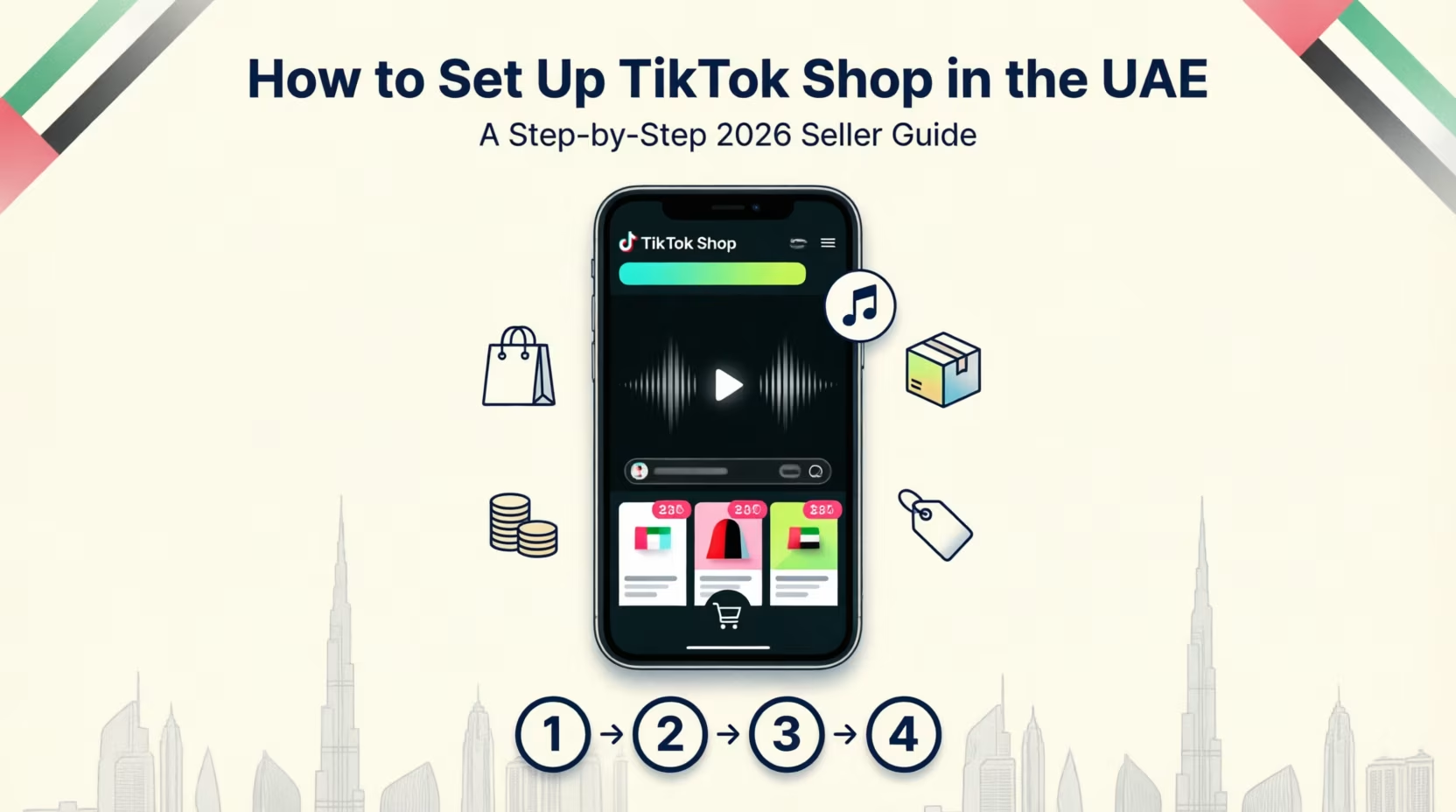 How to Set Up TikTok Shop in the UAE: A Step-by-Step 2026 Seller Guide
-
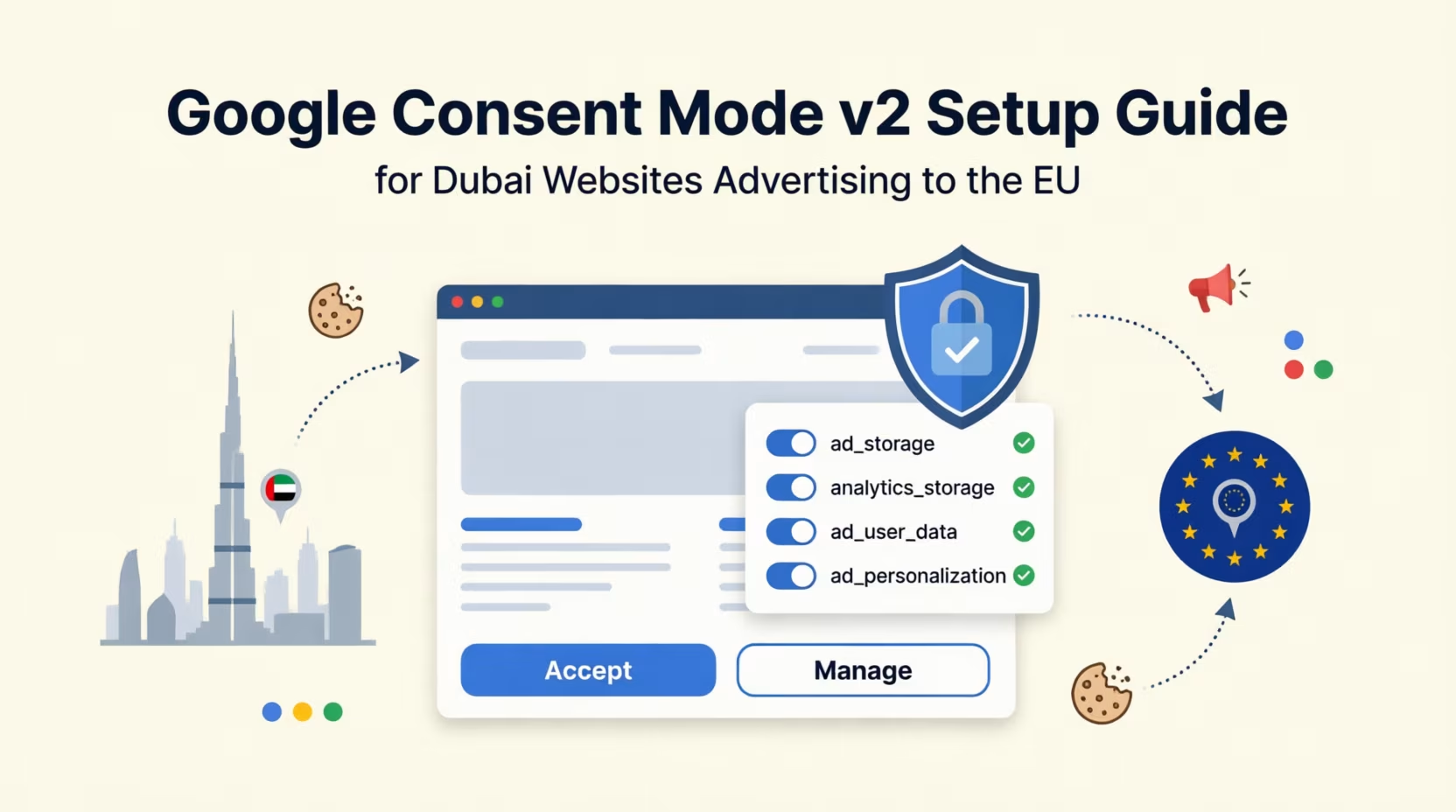 Google Consent Mode v2 Setup Guide for Dubai Websites Advertising to the EU
-
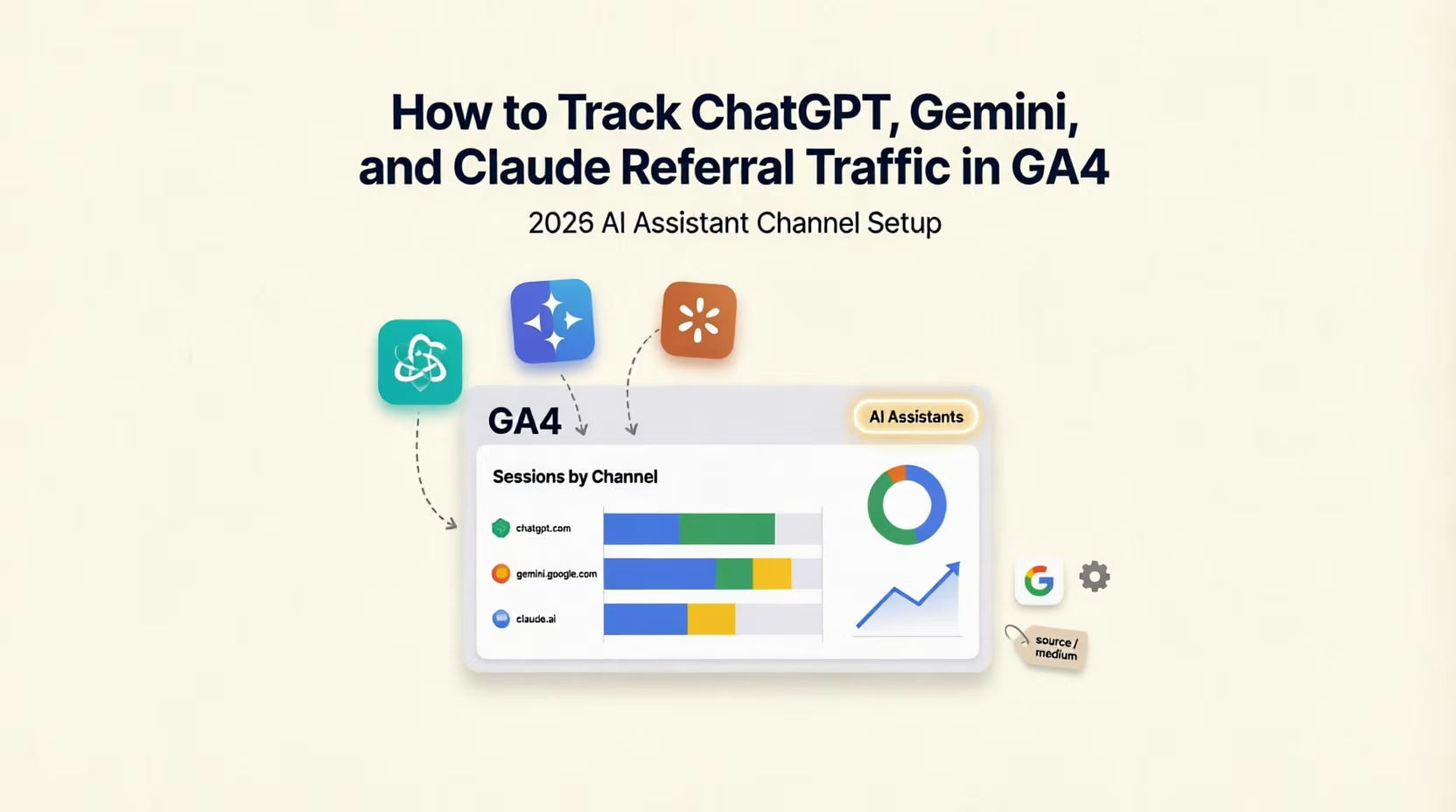 How to Track ChatGPT, Gemini, and Claude Referral Traffic in GA4 (2026 AI Assistant Channel Setup)
-
 Two Critical WordPress Vulnerabilities Patched in August 2026 — Update Your Dubai Site Now
-
 UAE PDPL Compliance for Marketers: What Your Tracking Pixels Actually Need in 2026
-
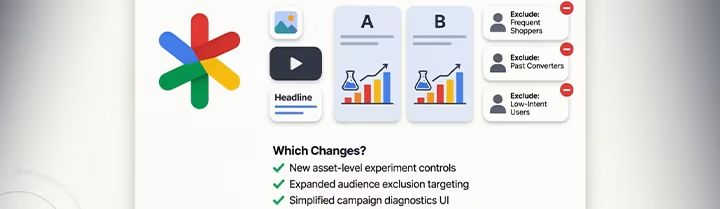 Performance Max in 2026: Asset Experiments, New Audience Exclusions, and What Actually Changed
-
 Should You Let an AI Agent Run Your Ad Campaigns? A Dubai Marketer's Honest Take
-
 AI Overviews vs AI Mode: What Changed in Google Search in 2026 (And What Dubai Businesses Should Do About It)
-
 Google Ads Is Removing Language Targeting From Search in September 2026 & What It Means for Your EN/AR Campaigns
-
 Google Says GEO Isn't a Separate Strategy From SEO— What That Actually Means for Dubai Businesses
Get a Growth Plan, Not Just a Quote
Seeking expert digital marketing, web design, or graphic design in the UAE? Let's discuss your project and deliver tailored solutions for measurable growth.
Book Free Consultation